About Pterocarpus angolensis DC.
Species Baseline Identification
Pterocarpus angolensis DC. is a deciduous tree that typically grows to 16 meters in height.
General Morphology & Height
It has dark brown bark and a tall, wide-crowned canopy made of shiny compound leaves. In preferred wetter locations, trees usually reach 18–19 meters tall.
Leaf Emergence Timing
Leaves emerge when the tree flowers, or shortly after flowering.
Leaf Structure & Dimensions
The leaves are alternate, deep green, and imparipinnate, with 11 to 19 subopposite to alternate leaflets; each leaflet measures 2.5–7 cm long and 2–4.5 cm wide.
Flower Characteristics & Timing
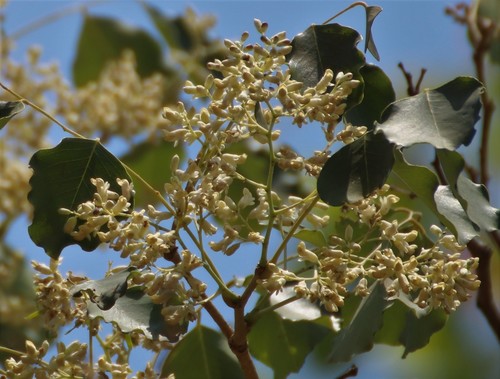
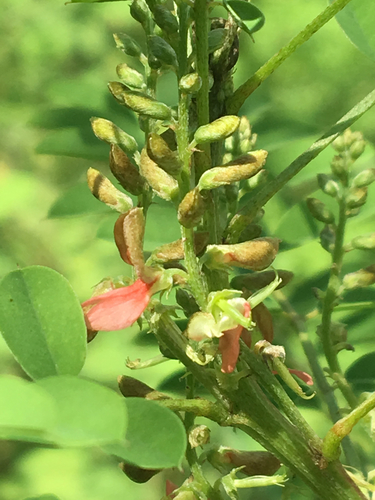
The tree produces abundant scented orange-yellow flowers in panicles 10–20 cm long, and flowering occurs in spring. In southern Africa, this typically happens just at the end of the dry season, often around mid-October.
Fruit Structure & Appearance
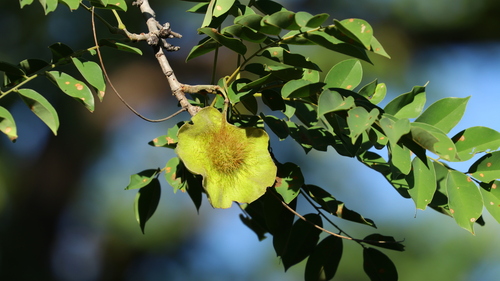
Its fruit is a pod 2–3 cm in diameter, surrounded by a circular wing 8–12 cm across. The pod looks like a brown fried egg, and contains a single seed.
Seed Pod Persistence
This brown, papery, spiky seed pod remains on the tree long after its leaves have fallen.
Growth Habit In Poor Drainage
When growing in poorly drained areas, the tree still survives but develops a more open growth habit, with leaves growing only at the ends of long branches, creating a "stag-headed" appearance.
Common Name Etymology
This species is commonly called a blood wood tree, because cutting it releases dark red sap that looks like bleeding.
Native Range & Climate Requirements
Pterocarpus angolensis is native to southern and eastern Africa, where it grows across a wide range of localities that have a distinct dry season contrasting with a wet season. It grows best in warm, frost-free conditions.
Soil & Rainfall Preferences
It requires deep sandy soil or well-drained rocky slopes, in areas with annual rainfall above 500 mm.
Open Woodland Habitat Growth
It grows well in open woodland, such as the Mashonaland plateau in Zimbabwe and the northern KwaZulu-Natal region of South Africa, where it develops a broad crown with thick branches, and acts as a pioneer species on woodland and forest margins.
Closed Woodland Population Traits
The largest, healthiest specimens grow in the seasonal closed woodland of central Mozambique and parts of Malawi, where the species sometimes forms pure stands.
Faunal Associations & Seed Predation
Many animals feed on Pterocarpus angolensis: larvae of charaxes butterflies, squirrels, baboons, and monkeys eat its seed pods, which reach around 12 cm in diameter.
Damage By Large Herbivores
Elephants have been recorded destroying Pterocarpus angolensis by pushing the trees over.
Wood General Properties
The wood of Pterocarpus angolensis has multiple uses. Its brown heartwood is resistant to borers and termites, is durable, and has a pleasant spicy scent.
Wood Use For Furniture & Curios
The wood polishes well, and is widely known in tropical Africa as mukwa, used to make high-quality furniture with an attractive light brownish-yellow color. It is also used to make decorative curios and tools.
Wood Use For Canoe Building
Because the wood has very little shrinkage or swelling when exposed to moisture, it is ideal for building canoes.
Sapwood Properties & Uses
Furniture and curios are often made from the reddish sapwood. The sapwood's red color comes from the plant's characteristic dark red sap, which is the source of the common name Bloodwood.
Wood Use For Musical Instruments
The wood produces a rich, resonant sound, so it is used to make many different types of musical instruments; in Zimbabwe, the traditional mbira is traditionally carved from mukwa wood.
Bark Extract Activity
Methanolic extracts from the bark of this tree have been reported to have molluscicidal activity against some species of freshwater snails.
Cultural Beliefs & Traditional Planting
The resemblance of the tree's sap to human blood has led to a belief that the tree has supposed magical healing properties for blood-related conditions. For this reason, along with its natural fire resistance, Pterocarpus angolensis is sometimes planted around chief's enclosures to serve as a living fence.