About Pternistis capensis (J.F.Gmelin, 1789)
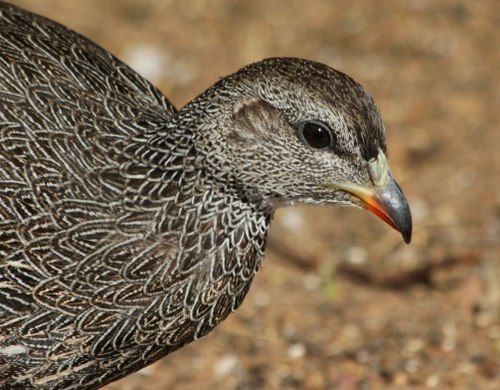
This species has the scientific name Pternistis capensis (J.F.Gmelin, 1789), and is commonly called the Cape spurfowl. Adult Cape spurfowl measure 40–42 cm (16–17 in) in total length. Males average larger than females, weighing 600–915 g (1.323–2.017 lb), while females weigh 435–659 g (0.959–1.453 lb). From a distance, this large spurfowl appears entirely dark except for its bright red legs. When viewed up close, its plumage shows fine grey and white vermiculation, with a plainer, less patterned crown and nape. Males and females have similar plumage patterns, but males have two spurs on their legs, while females have at most one short spur. Juvenile Cape spurfowl look similar to adults, but they have duller leg coloration and their vermiculation is more distinct. This large, dark francolin cannot easily be confused with any other species found within its native range. The Cape spurfowl is a common resident in the strandveld, renosterveld, and fynbos regions of the Western Cape, occurring most often at lower altitudes. At higher altitudes in this area, it is replaced by the grey-winged francolin. It also lives in the succulent (westerly) karoo at lower population densities, and in the Nama karoo, where it occurs most often close to rivers. Its natural range naturally includes scrub habitat along the banks of the lower Orange and Fish Rivers. It has been introduced to Robben Island, where it thrives due to the island's parasite-free environment. It will forage in modified human-altered habitats including parks, croplands, orchards, vineyards, and stands of the invasive tree rooikrans.