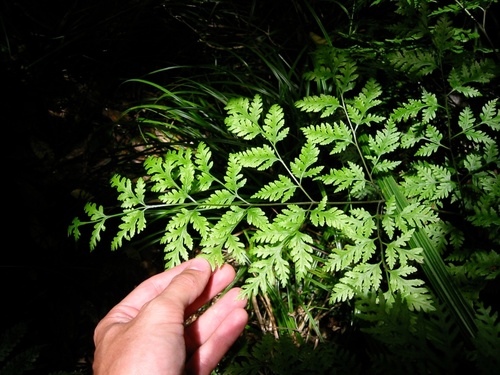
About Pteris macilenta A.Rich.
Pteris macilenta A.Rich. is a terrestrial fern with a typically short, slender, erect, often ascending rhizome that is not deeply buried. The rhizome is marked by fallen stalk bases, produces lateral roots, and supports crowded stipes 10 to 30 cm long. Stipes are dark brown at the paleate base, where they bear long, gradually tapering dark brown scales, and pale brown above. Mature plants of this species can reach up to 50 cm in total height, and frond abundance depends on habitat quality: plants can be as small as 10 cm tall when growing in poor conditions.
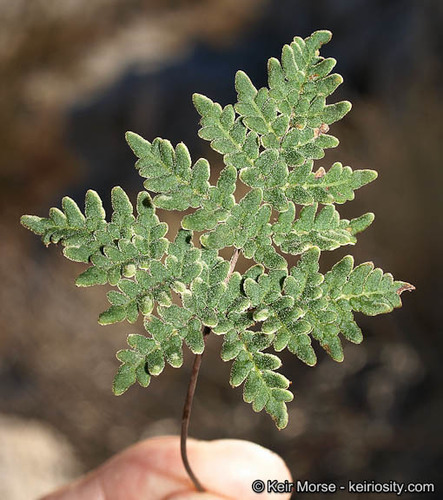
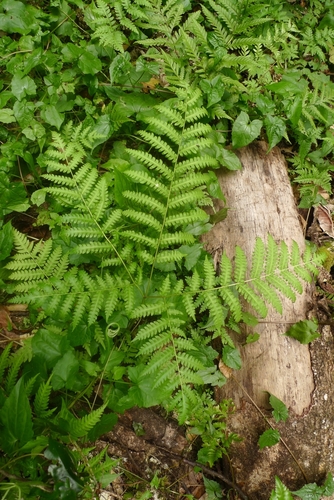
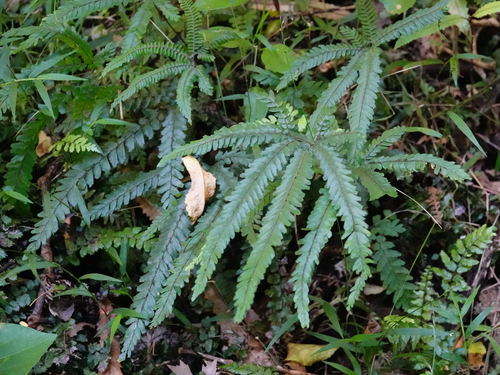
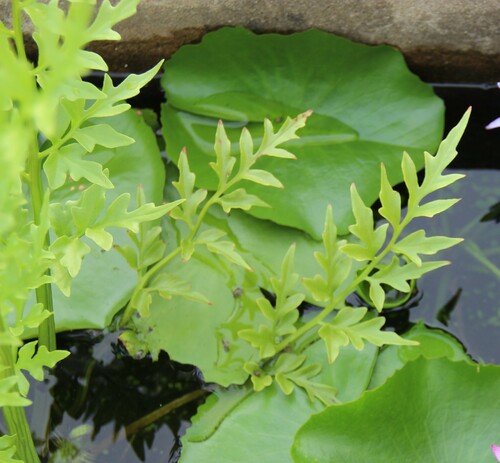
P. macilenta fronds are pale green, membranous and flaccid, with a broadly deltoid shape ranging from 20 to 90 cm in length and 15 to 50 cm in width. Fronds have a 2–3 pinnate structure, with minutely punctate laminae. Veins anastomose, particularly along small branches branching off the main vein. Pinnae are alternate to subopposite, often long-stalked, and shaped deltoid to ovate-lanceolate with acuminate tips. The rachis is smooth, yellow-brown, narrowly winged on its distal half, and bears scattered scales on pinnae. Lamina texture ranges from sub-coriaceous to sub-membranous for plants growing in sheltered locations. Frond color ranges from dark green in shaded environments to paler green in exposed areas, and yellowing is common when the plant is under extreme stress.
This species can be distinguished from close relatives by a set of consistent morphological traits. It differs from the closely related Pteris saxatilis by its larger size, slightly more coriaceous laminae, less widely spaced pinnae, and larger spores. It also has alternate (rather than sub-opposite) secondary pinnae on the lowest primary pinnae, and non-overlapping, usually herbaceous pinnae. Compared to Pteris epaleata, P. macilenta has more obviously stalked secondary pinnae, and shorter, broader ultimate segments. Fertile pinnules of P. macilenta have a similar shape to sterile pinnules; sori are usually abundant and short, growing along sinuses, with segment tips remaining free of sori. Sporangia are smaller than those of related species, and the soral flap is narrow and firm. Occasional hair-like paraphyses are present among the spores. The spores of P. macilenta measure 41-46 μm in diameter, with a polar diameter of 25 to 31 μm and an equatorial diameter of 29 to 36 μm, giving a P:E ratio of 5.41:8. These spores are larger than the spores of Pteris carsei.
The original description of this species was published by Achille Richard in 1832, and was later translated from French by John Braggins in 1975. Richard's original translation notes that this species is easily remarkable, as its growth and appearance distinguish it at a glance from all other species in the genus Pteris, and links it more or less closely to some species of Lindsaea. Richard recorded fronds reaching about 1.5 feet, and sometimes even 2 feet, in length, formed by a very small number of widely spaced pinnae that are more or less deeply pinnatifid. Divisions of these pinnae are either entire or irregularly toothed at their tips, and usually very glabrous. Richard noted that the species approaches Pteris vespertilionis La Billardiere, but is nevertheless quite distinct.
The genus Pteris L. has a global distribution, occurring mainly in tropical areas, with a small number of species extending into southern regions including New Zealand, Tasmania, South Africa, and South America. Pteris macilenta is a species endemic to New Zealand, with a limited distribution within the country. It is found across the North Island, South Island, and the Chatham Islands. In the North Island, it occurs in Northland, Auckland, the Volcanic Plateau, Gisborne, Taranaki, and the Southern North Island, with a continuous range from Te Paki to Wellington. It grows predominantly in coastal and lowland areas, and extends more rarely into montane districts of the central North Island. It can be found from sea level up to 800 meters elevation, with notable populations in the Coromandel Ranges and on Mt. Pirongia. In the South Island, it is common in coastal and lowland regions between the Marlborough Sounds and Greymouth, growing up to 520 meters near Nelson. Its range extends to outlying areas in Canterbury and along the West Coast as far south as Martins Bay.
P. macilenta prefers habitats ranging from coastal to montane regions in northern parts of its range, and predominantly grows in dry, less vegetated sites within forests. It occurs commonly in a range of settings including open kauri, podocarp, beech, and broadleaved forests, as well as under manuka and kanuka scrub, and with Carex secta. It is much more common on the New Zealand mainland than on offshore islands. The species shows affinity for substrates such as scoria, greywacke, and limestone, and favors environments including stream banks, river terraces, wet gullies, clay banks, clearings, forest margins, roadside banks, and coastal cliffs. It is especially prevalent over calcareous or other base-rich rocks, and often grows among the roots of trees.