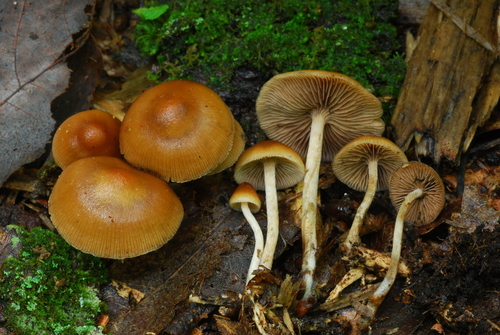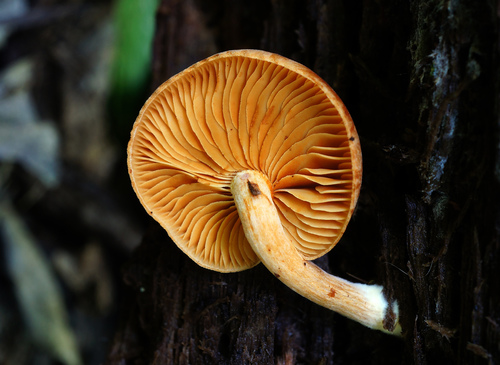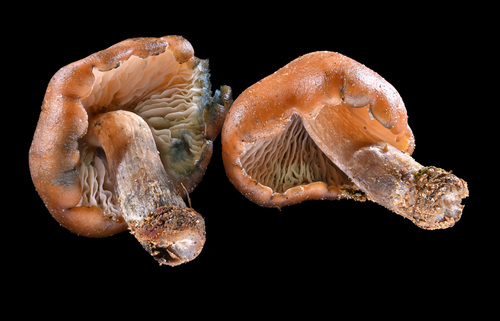
About Psilocybe muliercula Singer & A.H.Sm.
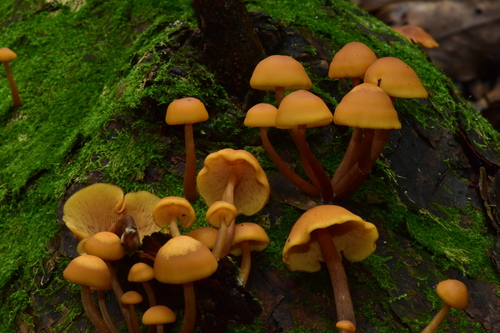
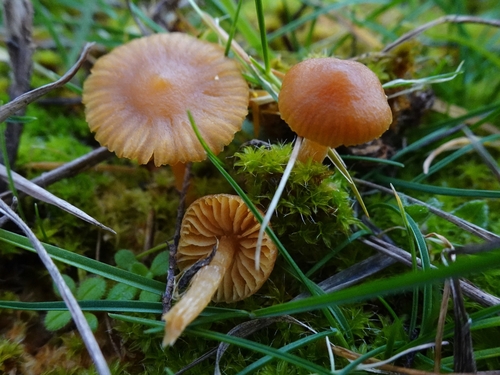
Psilocybe muliercula Singer & A.H.Sm. is an entheogenic mushroom species belonging to the family Hymenogastraceae. It is native to Mexico, and contains the psychoactive compounds psilocybin and psilocin. This species is classified in the section Zapotecorum of the genus Psilocybe. Other species included in this section are Psilocybe angustipleurocystidiata, Psilocybe aucklandii, Psilocybe collybioides, Psilocybe graveolens, Psilocybe kumaenorum, Psilocybe zapotecorum, Psilocybe pintonii, Psilocybe subcaerulipes, Psilocybe moseri, Psilocybe zapotecoantillarum, Psilocybe zapotecocaribaea, and Psilocybe antioquiensis. Because this species could not be found growing in the wild, botanist Roger Heim and mycologist Rolf Singer created their original descriptions of Psilocybe muliercula using dried mushroom specimens. These specimens were purchased from Matlatzinca Indians at the marketplace of Tenango del Valle, located in the Nevado de Toluca region of the state of Mexico. In 1958, Roger Heim described this fungus under the name Psilocybe wassonii, but he did not provide a formal Latin designation for the species. Later in the same year, Rolf Singer and Alexander Hanchett Smith formally published the species as Psilocybe muliercula; the specific epithet muliercula translates to "little women". Both early descriptions noted that this fungus was reported to grow in Pinus forests surrounding the town of Tenango del Valle. After multiple research expeditions to the area, Mexican mycologist Gaston Guzmán successfully located the species 10 kilometers away from Tenango del Valle, growing in an Abies forest on the slopes of Nevado de Toluca. Psilocybe muliercula grows in both Abies and Pinus forests. It occurs at elevations between 3150 and 3500 meters in Abies forests, and between 2600 and 2800 meters in Pinus forests. It is commonly found growing in areas that have experienced recent landslides.