About Psidium cattleianum Afzel. ex Sabine
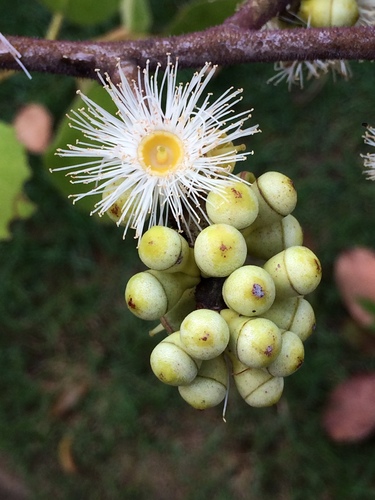
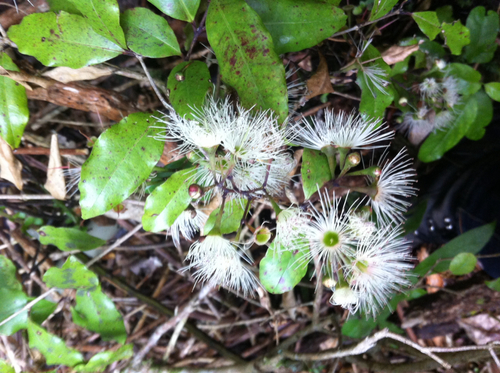
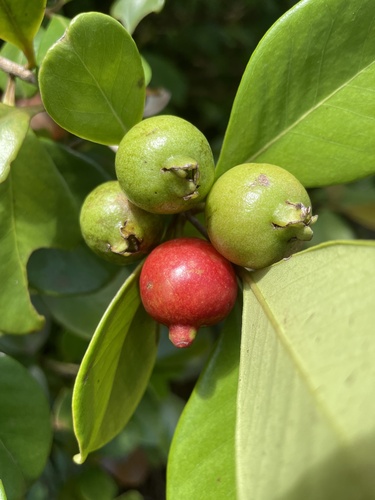
Psidium cattleianum Afzel. ex Sabine (alternatively spelled Psidium cattleyanum) is a small, heavily branched tree. It reaches a maximum height of 13 m (43 ft), though most mature individuals grow between 2 and 4 m (6 ft 7 in – 13 ft 1 in). It has smooth grey to reddish-brown bark, and oval to elliptical leaves that grow up to 4.5 cm long. Plants begin bearing fruit when they are between 3 and 6 years old. The fruit is ovular, around 4 cm long, with thin skin that ranges in color from yellow to dark red or purple. Its flowers grow either singly or in clusters of three, with each flower having five petals. This species reproduces both by producing seeds and by cloning; clonally produced suckers typically have a larger leaf area than other growth. It grows in USDA hardiness zones 9a–11. Though it is native to the Amazonian Basin of Brazil, it has been introduced to and become established across many tropical regions worldwide. It was brought to Hawaii as early as 1825 to develop an agricultural market for its fruit, but it has never become a commercially viable product there. In introduced regions, it is now very common in tropical rainforest ecosystems, mostly due to accidental transportation and its invasive traits. Psidium cattleyanum grows primarily in mesic tropical rainforest environments, and can be found at elevations up to 1,300 m (4,300 ft), though most populations occur below 800 m (2,600 ft). Within its native range, it does not become dominant in plant communities. It is classified as invasive outside its native range due to its strong tolerance for many different environments, and it grows in both undisturbed areas and highly disturbed roadside habitats in its invasive range. Its invasive success may be linked to high genetic variation: variants with different fruit colors grow clustered at different elevations. Additionally, this species is highly shade-tolerant, can grow in soils with moderate to high pH, withstands heavy leaf cover, and responds to branch bending or breakage by growing vigorous new shoots. Psidium cattleyanum is often found growing near invasive feral pigs; this association likely exists because feral pigs help spread the species. Pigs disturb habitats by digging in soil, which makes it easier for Psidium cattleyanum seeds to reach the soil. Feral pigs may also eat the fruit, and the seeds are deposited into soil in the pigs' scat. Preliminary research indicates that Psidium cattleyanum may be allelopathic, as its roots have been found to inhibit the growth of at least two other plant species when soil pH is not a contributing factor. The entire fruit of Psidium cattleyanum is edible, as both the thin skin and juicy interior are soft and flavorful. The fruit can also be processed into jam and juice, and the skin is often removed to achieve a sweeter flavor. The fruit's seeds are small and white, and have documented health benefits: they contain high levels of vitamin C, and have antioxidant, anti-inflammatory, and antimicrobial properties. The plant's leaves can be brewed to make tea. Its wood is hard, compact, durable, and strong, and is used for lathe work, tool handles, charcoal, and firewood. In Brazil, the plant is considered essential for mixed planting during reforestation of reclaimed and protected land. In Hawaii, Psidium cattleyanum has modest economic impacts from its edible fruit, but products made from the species are not commercially available. This is due to lack of market demand and widespread infestation of fruit flies, which makes harvested fruit inedible very quickly after picking. In Tanzania, local people handcraft necklaces by tying together beads made from individual Psidium cattleyanum fruits.