About Pseudopodospermum hispanicum (L.) Zaika, Sukhor. & N.Kilian
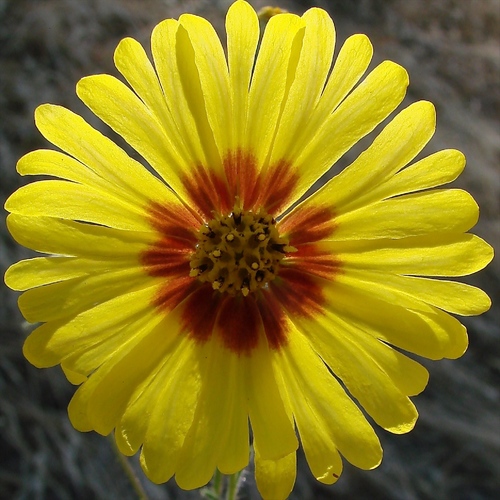
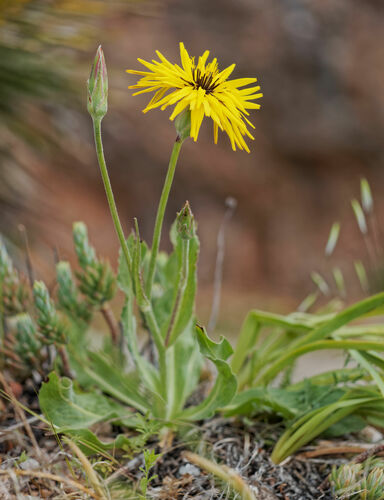
Pseudopodospermum hispanicum, also known as black salsify, is a naturally biennial plant that is grown commercially as an annual. In its natural biennial life cycle, it completes a vegetative growth phase in the first year, then flowers in the second year. Mature flowering plants can reach 60 cm in height, with stems that grow up to 5 cm in diameter. Its flowers are hermaphroditic and pollinated by insects. Flower heads grow at the stem terminus, and are made up of yellow ray florets. The plant's stem is smooth and covered in leaves, with leaves ranging in shape from lanceolate to ovate, and featuring smooth, uncut entire margins. Black salsify produces a long, cylindrical taproot covered in a brownish to black cork layer. When harvested at a young age, the roots resemble carrots: they are tender, long, tapered, and have shiny white flesh. Young roots contain milky latex that oxidizes and turns the root surface black when exposed to air. Black salsify cultivation has historically been centered primarily in Europe. Belgium, France, and the Netherlands are the world's largest producers of the crop, with Germany also producing significant quantities. In Germany, the cultivar 'Hoffmanns Schwarzer Pfahl' is widely grown by commercial producers, while the cultivar 'Duplex' is popular among small-scale gardeners. A small number of other cultivars are available for commercial purchase. Because black salsify was a only grown in limited local areas before it began being produced for a wider market, comparatively few landraces of the species exist. Collections of its local races and older cultivars are held at the Nordic Genetic Resource Center in Sweden and the Vavilov Institute of Plant-Genetic Resources in Russia.