About Pseudophyllus titan White, 1846
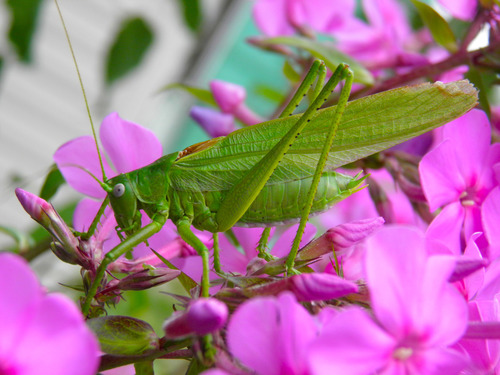
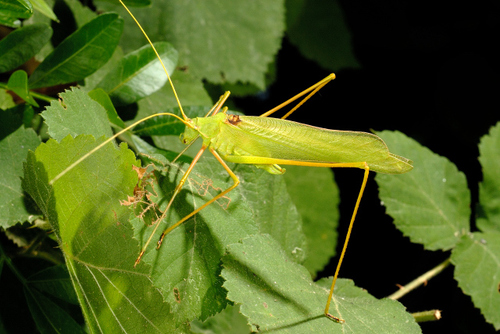
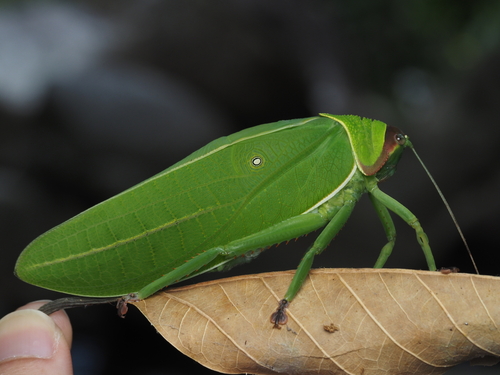
Pseudophyllus titan, commonly called the giant false leaf katydid – a name that is also used for several other species – is a leaf-mimic bush-cricket belonging to the subfamily Pseudophyllinae. This species occurs in the canopies of tropical forests across Mainland Southeast Asia, Sindh in Pakistan, Bangladesh, northeastern India (specifically Assam and Nagaland), and the southernmost part of China (Yunnan). The species' type locality is Sylhet, Bangladesh. It is one of the largest species within the genus Pseudophyllus, placing it among the largest Orthoptera in the world. From head to the tip of its folded wings, it typically reaches a length of 13 cm (5.1 in), with an approximate wingspan of 23 cm (9.1 in). Like many other cricket and grasshopper species, mature males can produce sound via stridulation. Their stridulation creates a relatively loud, distinctive chirp that resembles a bird's call, and they usually perform this singing behavior at night. Commercially prepared framed specimens sold to insect collectors are often traded under the common name "Sasuma grasshopper". In some areas within its distribution range, this species is sometimes roasted and consumed as a snack.