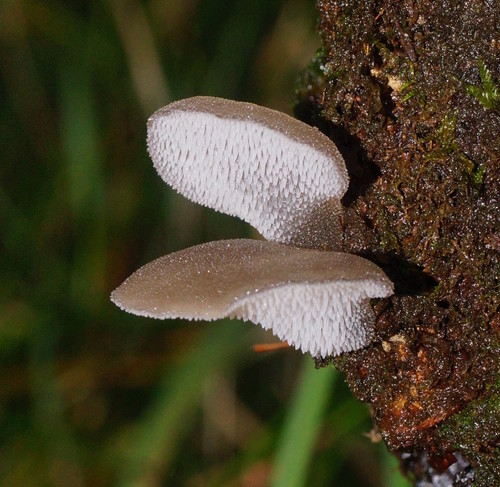
About Pseudohydnum gelatinosum (Scop.) P.Karst.
Pseudohydnum gelatinosum produces gelatinous fruit bodies that range in color from whitish to light grayish or tan. Each fruit body measures 2–7 centimeters (3⁄4–2+3⁄4 inches) in both width and height, and bears spines (teeth) up to 3 millimeters (1⁄8 inch) long. This species produces a white spore print, and has little to no flavor. Originally thought to be a cosmopolitan species found across the globe, recent DNA evidence indicates that Pseudohydnum gelatinosum is actually restricted to Europe and northern Asia. Superficially similar but genetically distinct related taxa occur in other regions outside this range. Pseudohydnum gelatinosum grows on dead conifer wood. Recognized North American members of this species complex can be found near both the Atlantic and Pacific coasts. Fruiting occurs between November and February on the Pacific coast, and between July and September in other North American locations. Western North American specimens usually have a distinct vertical stalk, unlike eastern North American specimens. This fungus, commonly called jelly tooth, is edible and can even be eaten raw, though its quality improves when marinated. It is collected and eaten as a wild food in parts of Bulgaria, Russia, and Siberia.

