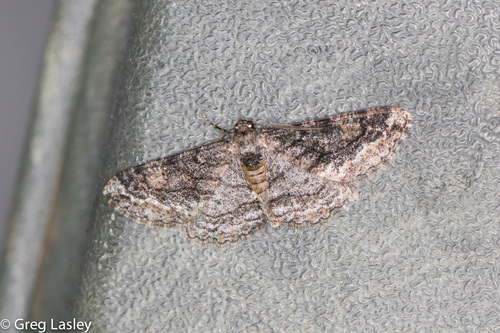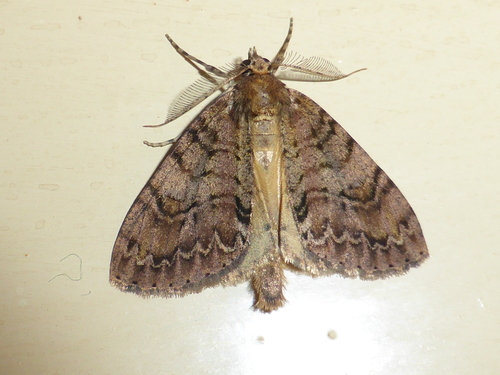
About Pseudocoremia suavis Butler, 1879
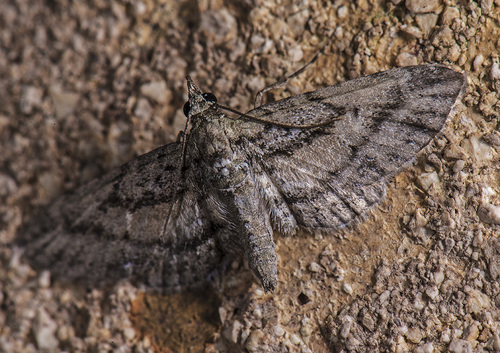
Pseudocoremia suavis, commonly known as the common forest looper, is a species of moth belonging to the family Geometridae. It was originally considered endemic to New Zealand, where it is common across the entire country. In New Zealand, the larvae of this moth feed on a wide variety of native trees, shrubs, and introduced plant species, including southern beech (Nothofagus spp.), podocarps, kanuka (Kunzea ericoides), and European gorse (Ulex europaeus). In 2007, the species was recorded in west Cornwall, Great Britain, marking the first time it had been found outside of New Zealand. The first unidentified specimen was caught on 15 April 2007 by Tony James in a regular garden light trap near Tregonning Hill, in the parish of Breage. By October of that year, four more specimens were caught in the same garden. It took a full year for the specimens to be identified by the Natural History Museum, London. The garden where the moths were caught is adjacent to a small plant nursery, so it is possible the moths were introduced to the area on plants transported from another British nursery. All information below about the life cycle of this species in Cornwall comes mainly from a single female caught on 30 October 2015 in west Cornwall that was retained for breeding purposes. The larvae from this female were reared at temperatures between 15–20 °C, inside air-tight plastic boxes. The Cornish larvae initially fed on Leyland cypress (Cupressus × leylandii), but became unhealthy and were moved to Scots pine (Pinus sylvestris) in their second instar. They also fed on box (Buxus sempervirens) and yew (Taxus baccata), but preferred Scots pine.