About Pseudocolopteryx acutipennis (P.L.Sclater & Salvin, 1873)
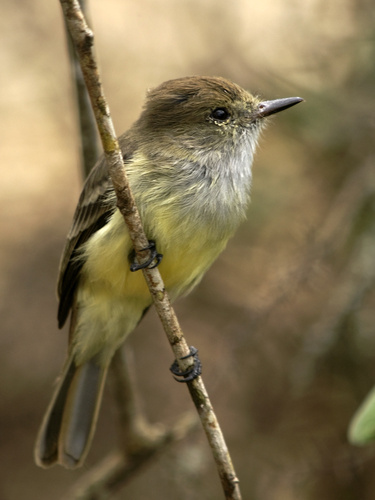
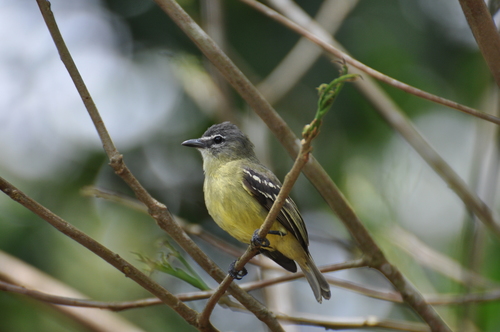
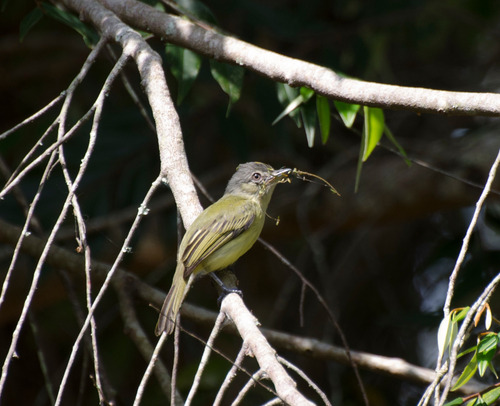
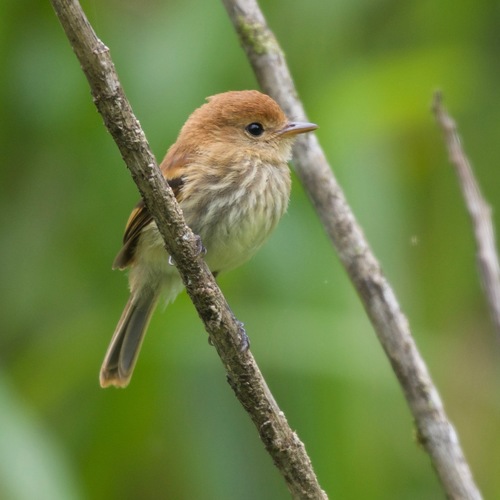
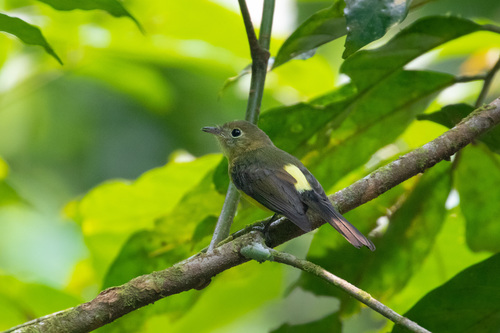
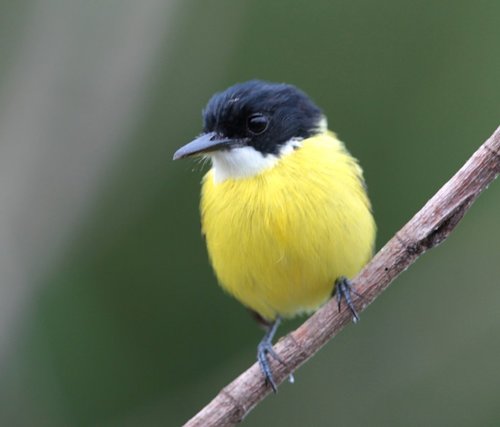
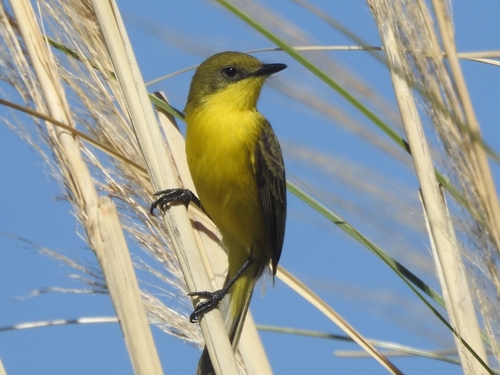
The subtropical doradito, with the scientific name Pseudocolopteryx acutipennis (P.L.Sclater & Salvin, 1873), measures 11 to 12 cm (4.3 to 4.7 in) long and weighs 7 to 10 g (0.25 to 0.35 oz). Both sexes share the same plumage and have a short shaggy crest. Adult individuals have mostly bright olive coloring on the head, upperparts, and tail, with dusky cheeks. Their wings are olive-brown, with light gray edges on the flight feathers and dull cinnamon tips on the wing coverts; the tipped coverts form two faint wing bars. The throat and underparts are golden-yellow. Both sexes have a dark brown iris, a slender, black, warbler-like bill, and dark gray legs and feet. Immature birds are similar to adults, but have more prominent buffy wing bars and a pale base to the mandible. This species has a disjunct distribution. Its range includes Colombia's Central Andes, the central Andean valley of Ecuador between Imbambura and Chimborazo provinces, local populations in Peru's central Andes, and an area extending from Peru's southern Andes south through central Bolivia, western Paraguay, and southern Brazil into northwestern Argentina. The subtropical doradito primarily lives in reedbeds, marshes, wet pastures and fields with sedges, and brushy areas near water. It can also be found in grassy areas that contain few sedges. Its elevation range differs across its distribution: it occurs between 1,500 and 2,800 m (4,900 and 9,200 ft) in Colombia, between 2,400 and 3,500 m (7,900 and 11,500 ft) in Ecuador, between 1,400 and 3,200 m (4,600 and 10,500 ft) in central Peru, below 1,000 m (3,300 ft) in southern Peru, and below 700 m (2,300 ft) in Brazil.