About Pseudoaricia nicias (Meigen, 1830)
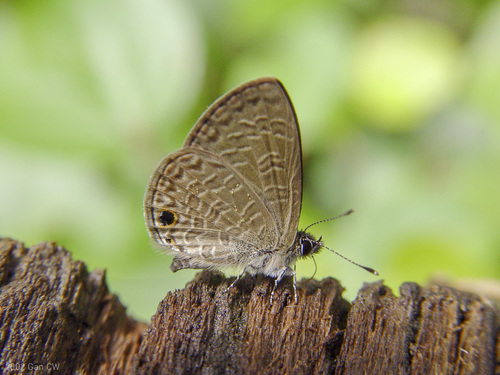
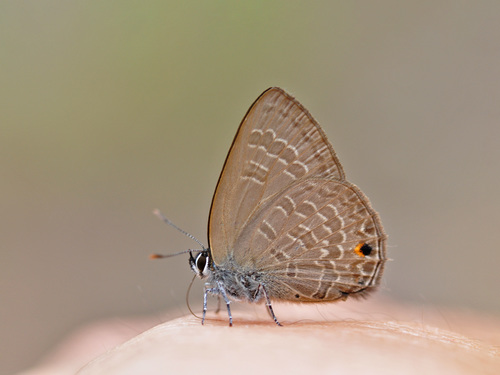
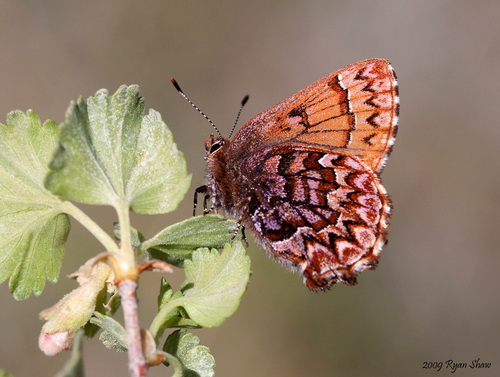
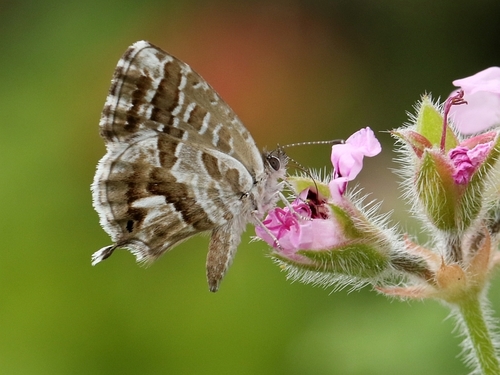
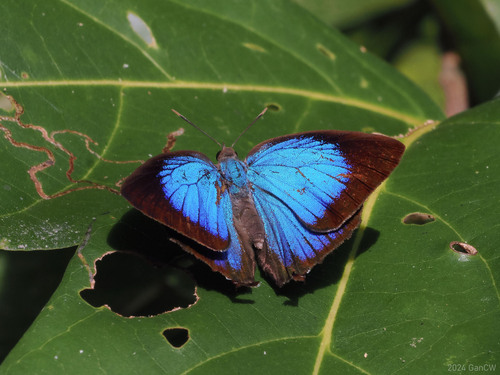
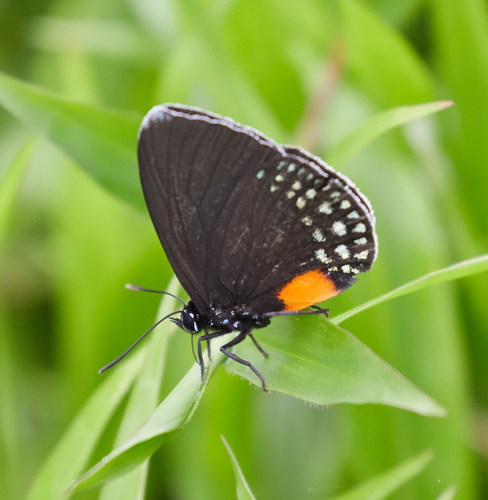
This description of Pseudoaricia nicias, originally published by Seitz under the name Lycaena donzelii Bdv., notes the species is scarcely even as large as the smallest Pseudoaricia eumedon. The upperside of the wings is black-brown, with a dark discocellular spot and grey-brown fringes. Males have the upperside dusted with metallic blue-green, except for a very broad black marginal area that retains its original color. The underside is grey, with eyespots (ocelli) that are barely prominent, and almost completely faded on the hindwing. A wedge-shaped white streak runs from the base of the hindwing to near the center of the outer margin. This species is found in the high Alps, northern Europe, and several Asian mountain ranges including the Urals and Tian-shan. Specimens from East Russia (Kazan) are smaller with a narrower marginal border, more greenish coloration on the upperside, and a very weakly developed reddish-yellow band on the underside; this form is named septentrionalis Krulik. The egg is flattened and pure white, laid on Geranium plants in July. Larvae hatch early in spring and feed inside the stalks and buds. When fully grown, larvae are pale olive-green, covered with short, whitish silky hair. They have three stripes darker than the body color along their sides, and an even darker stripe along the back. The lower side stripes are arranged so the lowest stripe of one segment continues the next higher stripe of the preceding segment. The sides are reddish near the spiracles (stigmata) and white along the outer edge. The pupa is pale olive-green with a dark dorsal stripe, with very transparent wing cases that bear a fine reddish network and small thin white hairs. Pupae are fastened low down on the stalks of Geranium, per recording by Mc Dunnough. Adult butterflies are active in July and August. Their flight, feeding and other habits are very similar to P. eumedon, but P. nicias is far less common. Individuals occur only singly, usually resting quietly on tall mature Geranium flowers; when disturbed, they settle again on the same or a nearby blossom after a short flight. Even when found among large groups of Alpine Blues drinking at puddles, only single specimens of this species are encountered, and it generally occurs only at considerable altitudes, such as the locations Stilfser Joch, Zermatt, Simplon and Maloya.