About Pseudevernia furfuracea (L.) Zopf
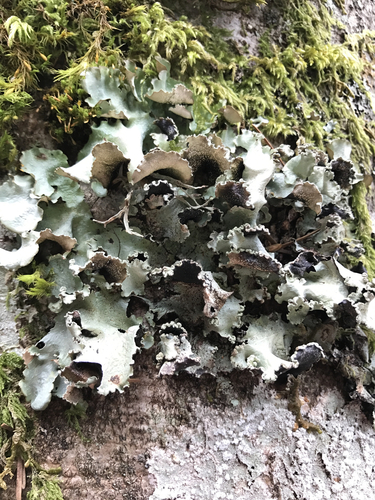
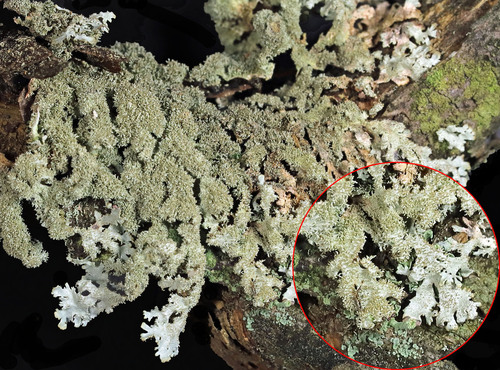
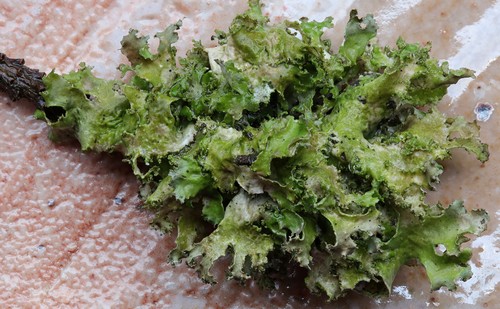
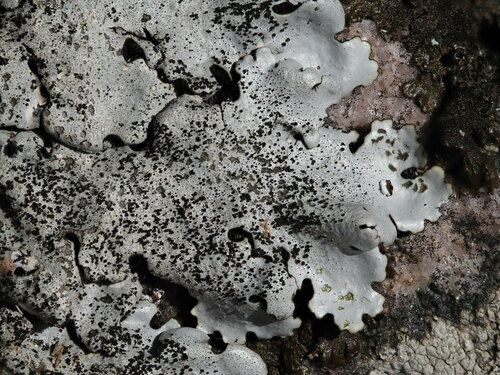
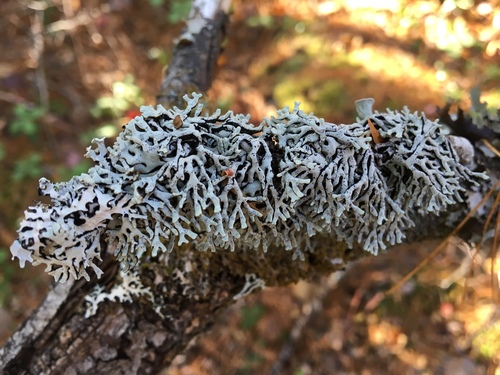
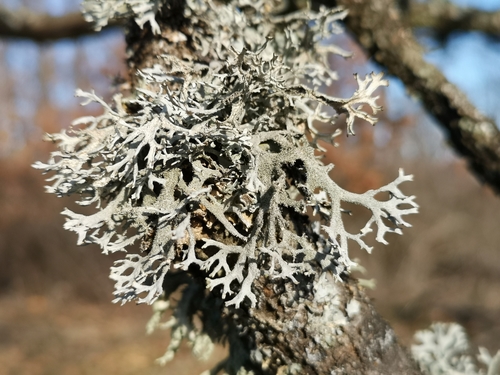
Pseudevernia furfuracea (L.) Zopf partners with photosynthetic symbionts (photobionts) from the green alga genus Trebouxia. It reproduces asexually through structures called isidia. Researchers have studied how isidia develop (their ontogeny) and what role they play in carbon dioxide gas exchange for this species. Pseudevernia furfuracea prefers to grow on nutrient-poor tree bark, including the bark of birch, pine, and spruce trees. While this species mostly reproduces via isidia, rare specimens can develop another asexual reproductive structure called soralia. When soralia are present, they are consistently capitate (head-shaped), substipitate (with a short stalk), whitish in color, and grow on both the central and edge surfaces of the lichen body (thallus). This species has two varieties that are identical in physical form, and are only distinguished by the secondary metabolites they produce. Variety ceratea Zopf. produces olivetoric acid alongside other physodic acids, while the nominal variety furfuracea produces physodic acid but no olivetoric acid. Some earlier authors, such as Hale in 1968, classified these two chemotypes as separate species, naming the olivetoric acid-containing specimens Pseudevernia olivetorina. However, most recent taxonomic literature classifies the two groups as separate varieties within Pseudevernia furfuracea. In the Alfacar and Viznar regions of Andalusia, Spain, Pseudevernia furfuracea is used as a traditional medicine to treat respiratory complaints. To prepare the remedy, the lichen thallus is washed and boiled for a long time to make a decoction that is then drunk. Laboratory studies have found that water extracts of this species have a strong protective effect against genotoxicity caused by bismuth compounds like colloidal bismuth subcitrate.