About Pseudephebe pubescens (L.) M.Choisy
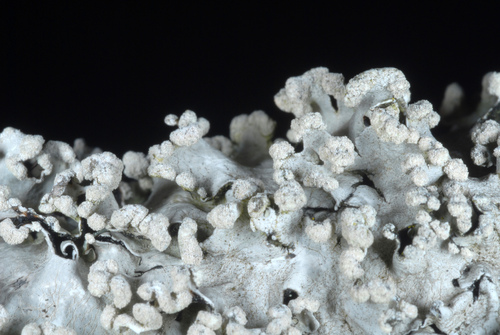
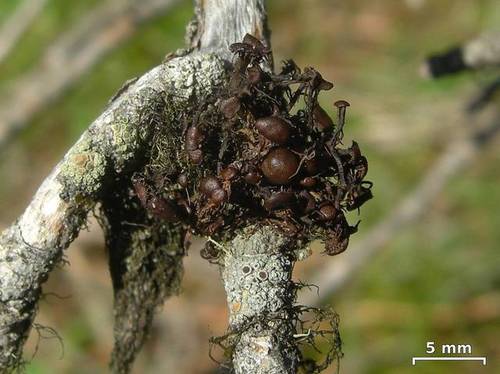
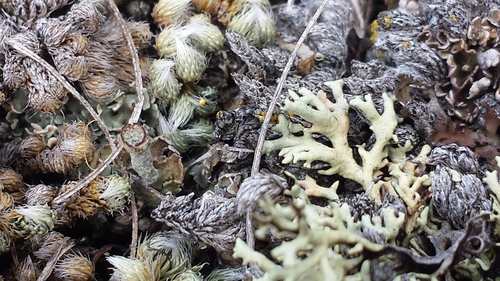
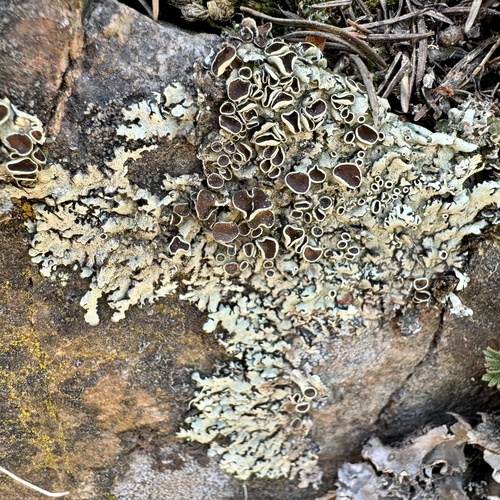
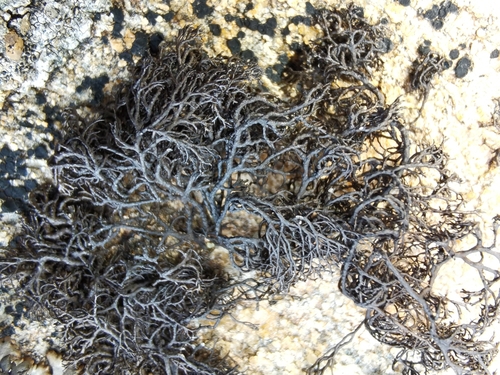
Pseudephebe pubescens is a fruticose lichen that forms decumbent mats constructed from isotomic-dichotomously branching thalli. It branches frequently, with branches weaving over one another to create a wool-like appearance. Its color ranges from dark brown to black, and it has a shiny surface. Apothecia are rare for this species; when they do develop, they are rarely larger than 6 mm in diameter, and match the visual appearance of the rest of the thallus. This species does not produce isidia, soredia, or pseudocyphellae. Pycnidia develop in large quantities on tubercles, and have prominent, visible ostioles. No secondary metabolites are known to be produced by Pseudephebe pubescens. This lichen grows specifically on acidic or silicate rocks in temperate-alpine or sub-arctic regions, and occasionally grows on wood. It has a circumpolar distribution: it has been recorded in Canadian territories, across the United States, and sometimes occurs in alpine Mexico. It is already known from Europe, has been recently discovered in China, and has also been found in the Andes and Australia. Compared to the related species Pseudephebe minuscula, Pseudephebe pubescens typically occurs in more temperate environments.