About Pseudagrion malabaricum Fraser, 1924
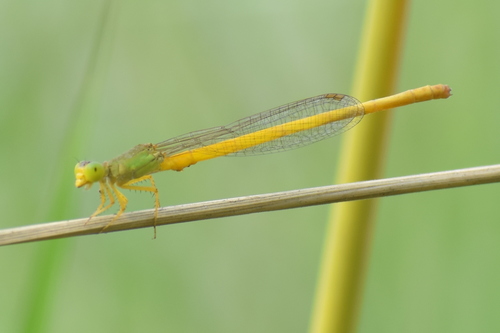
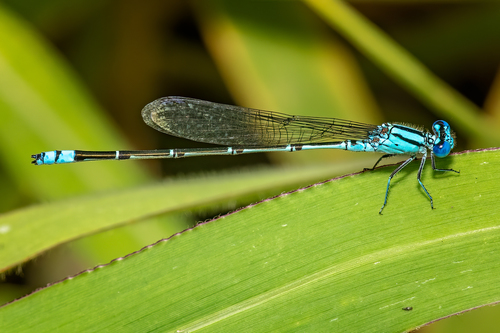
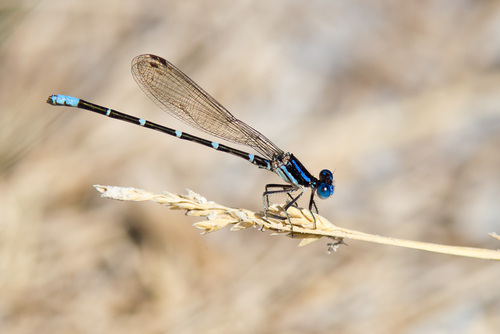
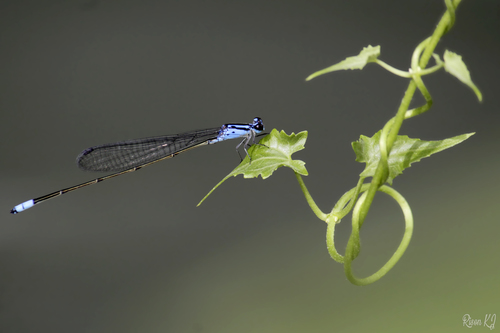
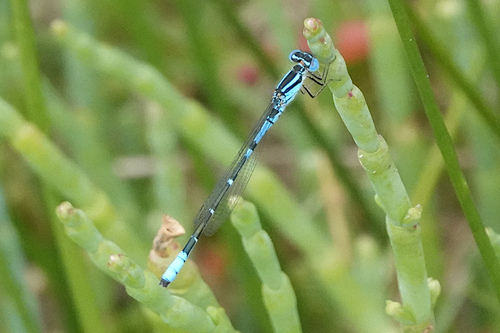
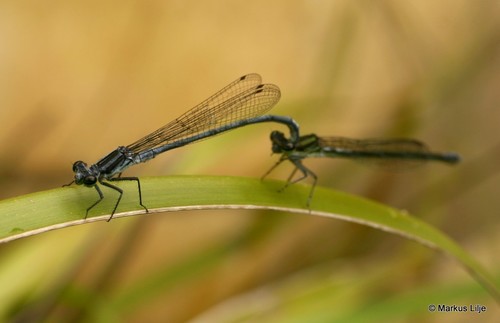
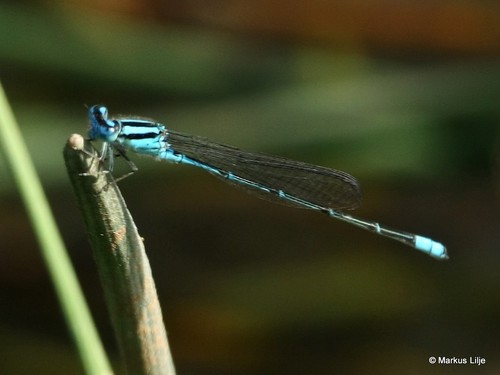
Pseudagrion malabaricum Fraser, 1924 is a medium-sized damselfly. Adult individuals have blue eyes that are dark on top, and the back of the head is black. The thorax is azure blue, marked with broad black dorsal, medial, and humeral stripes. The first and second abdominal segments are blue with black marks on the dorsum; the mark on the second segment resembles a chalice or thistle-head. Segments 3 through 7 are black on the dorsum and blue on the sides. Segments 8 and 9 are blue with narrow black apical annules. Segment 10 is black on the dorsum and blue on the sides. The superior anal appendages are black, diverging outward and curving inward at their apices. These appendages are smaller than segment 10, but not as small as the superior anal appendages of Pseudagrion australasiae. The inferior anal appendages are very small. Females have bluish green eyes and thorax, with the same marking pattern seen in males. The female abdomen has the same color pattern as the male, but is paler overall. In females, segments 8 and 9 are black with fine apical blue rings, and segment 10 is pale blue. This damselfly breeds in ponds, lakes, paddy fields, and marshes located in hills.