About Pseudacris maculata (Agassiz, 1850)
Size
This small frog species reaches approximately 30 millimeters in length.
Coloration and Dorsal Markings
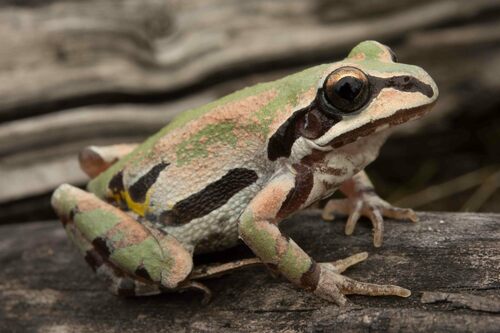
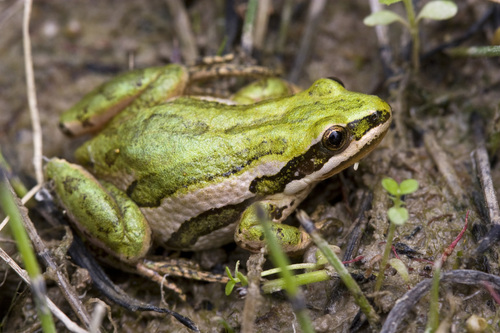
Its appearance is highly variable; it is normally brown, but can have a green dorsal surface, with three broken dorsal stripes that range from very distinct to quite faint. A dark band runs from the snout, across the eye, and continues down the side of the body.
Toe Pad Structure
It has slightly enlarged toe pads that help it climb small grasses and other vegetation.
Similar Species Distinction
This species is very similar to the western chorus frog, Pseudacris triseriata, and can be told apart from that species by its shorter legs.
Habitat
This species lives around permanent water bodies in both cleared land and forest.
Male Calling Period and Location
From April through September, males produce a "reeeek" call from grasses, vegetation, or the ground around these water bodies. This call is characteristic of the trilling frog clade within the genus Pseudacris.
Trilling Clade Naming Origin
This clade gets its name because each individual’s call is unique, with its own series of pulses.
Clade Subgroup Classification
Within the trilling frog clade, members are further split into "dynamic" and "static" groups, and recent studies place P. maculata in the static grouping.
Static Group Call Traits
The static grouping is defined by a lack of variability in an individual’s call, plus the ability to somewhat control the direction of calls.
Sexual Selection Call Study
Amphibian calls are commonly used for sexual selection, but a 2010 study by Bee et al. found no direct correlation linked to sexual selection. The researchers did find a connection between the lowest note of the call and body size, but did not have enough evidence to draw further conclusions.
Call Variability Observations
Every call in the study was different, but differences were subtle and required complex technology to detect. This similarity in calls means the frogs cannot distinguish between individual calls.
Hypothesized Call Function
It has been hypothesized that calls simply broadcast a caller’s position: to tell other calling males to stay away, and to let females know a receptive male is present.
Spring Emergence Timing
This is usually one of the first amphibian species to emerge in spring. It emerges so early that it is often still found when snow and ice are present.
Emergence Trigger Factors
This emergence timing directly correlates with snow melt and the water level of the water body that the population inhabits.
Breeding Frequency
Pseudacris maculata is an annual breeder.
Breeding Season Timing
Breeding occurs once the weather starts to warm, typically from late February to around April.
Egg Laying and Hatching
After mating, a single female can lay between 500 and 1500 eggs, with a highly variable hatching rate that ranges from 37% to 87%.
Metamorphosis Timing
Tadpoles complete metamorphosis around June or July.
Metamorphosis Survival Rate
In the wild, the metamorphosis survival rate also has a very wide range, from 10% to 100%.