About Prunus ursina Kotschy ex Boiss.
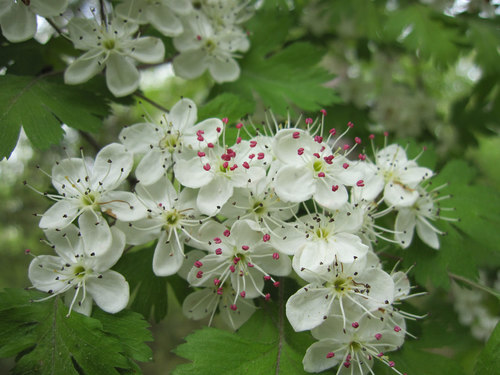
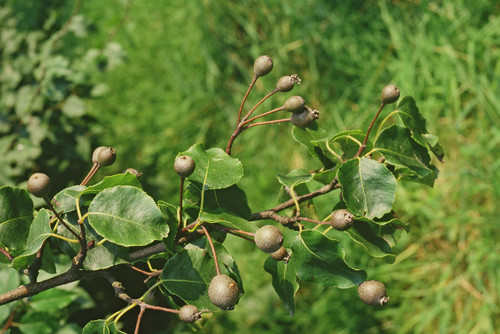
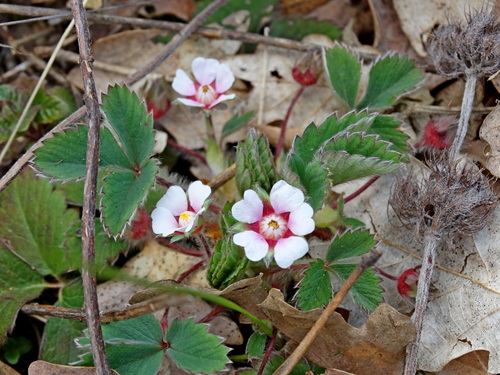
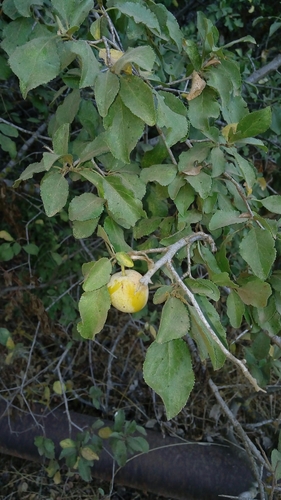
Prunus ursina Kotschy ex Boiss. is a deciduous shrub that can grow into a small tree, reaching 4 to 8 metres (13 to 26 ft) in height. It is heavily branched, and its branches sometimes produce spines. Its twigs have a velvety texture, and its leaves grow in an ovate to oblong shape. In spring, Prunus ursina produces pairs of white hermaphrodite flowers. When ripe, its globose fruit measures 2 to 3 cm across, turns from yellow to dark orange, and is unpalatable.
The fruit of this species may be toxic if eaten in excessive amounts. Like other Prunus plants, Prunus ursina contains amygdalin and prunasin, compounds that break down in water to form hydrogen cyanide. Hydrogen cyanide is a colorless, extremely poisonous chemical that gives almonds their characteristic flavor. These compounds are concentrated mainly in the leaves and seeds, and their presence can be detected by a bitter taste. They are usually present in too small an amount to cause harm, but any very bitter seed or fruit should not be consumed.
Prunus ursina produces more fruit when grown in full sun, but it can still grow successfully in partial shade. If its shallow roots are damaged, the plant will grow suckers. Honey fungus is one pest that affects plants in the genus Prunus, including this species. Its seeds require 2 to 3 months of cold stratification to germinate.
A dark grey to green dye can be extracted from the fruit of Prunus ursina, and a green dye can be obtained from its leaves. Small quantities of hydrogen cyanide are said to stimulate respiration and improve digestion, while excessive consumption of this toxin can cause respiratory failure and death.