About Prunus sibirica L.
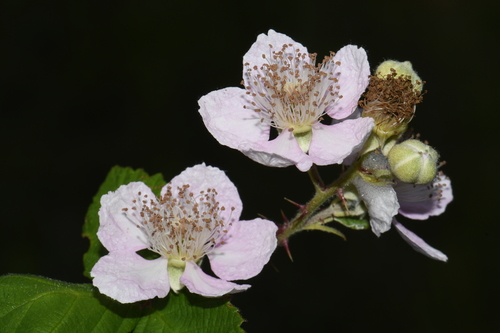
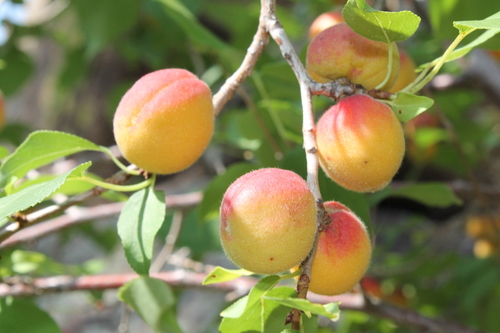
Prunus sibirica L. is a species with high genetic diversity. It grows as a small tree with spreading branches, reaching a height of 3 meters (10 ft). It is extremely frost-resistant, able to survive temperatures as low as −45 °C (−49 °F). The tree's main bark is dark grey, while branch bark ranges from reddish to dark brown; branches are sparsely hairy when young, but become hairless (glabrous) quickly. The winter buds are reddish-brown, shaped ovoid to conical, measure 2–4 mm long, and have hairy edges on their bud scales. The simple leaves have stipules. Leaf petioles are hairy when young, become hairless quickly, are red, measure 2 to 3.5 cm long, and have few to no glands. The leaf blades are simple, ovate to nearly circular, with pointed tips, measure 5 to 10 centimeters long and 3 to 7 centimeters wide, and have a rounded to heart-shaped base. Leaf surfaces are reddish, hairy and downy when young, later becoming glossy green and glabrous. Leaf margins are serrate (not double serrate). Flowers bloom in early spring, produced as solitary blooms. The flower stalk is around 1 to 2 mm long. The bell-shaped floral cup is purple on the outside, hairy at the base, and either glabrous or slightly downy. Flowers are hermaphrodite, with a diameter of 1.5 to 3.5 cm. They have five separate petals, which are almost circular to ovoid in shape, white with pink veins. The many separate stamens are nearly as long as the petals. Fruits mature in early to mid-summer; they are yellow to orange-red, with a reddish tint on the side that faces the sun. The dry, densely textured fruit flesh (mesocarp) separates easily from the hard stone (endocarp), and splits along the ventral suture when fully mature. The flesh may only be 2.5 to 3 mm thick. The compressed spherical stone inside the fruit has a smooth surface, and a diameter of 1.2 to 2.5 centimeters. The seed inside the stone is barely edible and has a somewhat bitter taste. Seed oil from P. sibirica has been studied for use as a source of biodiesel. Prunus mandshurica seeds have a significantly higher oil content, and also have potential as a biodiesel source.