About Prunus rivularis Scheele
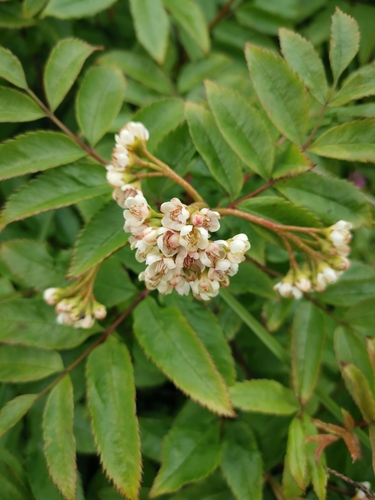
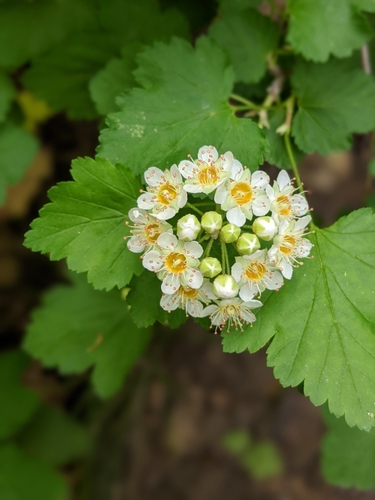
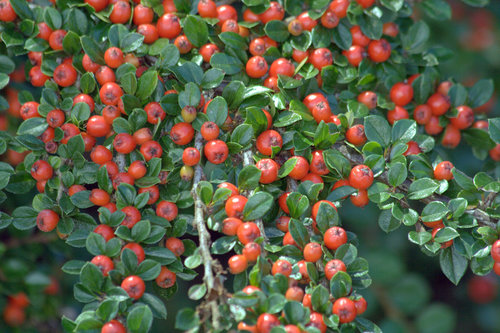
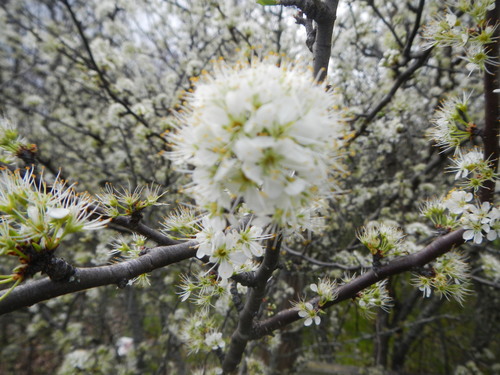
Prunus rivularis Scheele has simple leaves arranged alternately along stems. Leaves range in shape from elliptic to ovate, measuring 5–6 centimeters (2–2 1/4 inches) long and 2–3 cm (3/4–1 1/4 inches) wide. Leaf bases are cuneate, and leaf apices are acuminate. Leaf margins are serrate, typically bearing 10–11 teeth per centimeter. Flowers of this species usually bloom from March to April. Flowers are arranged in raceme inflorescences, which form as flower spikes growing from stalks that branch off the main stem. Individual flowers measure 12–16 millimeters (1/2–5/8 inch) across, and grow in clusters of 2 to 8 from leaf axils. The pedicels that attach flowers are 15–16 mm long, with a green, glabrous (smooth, hairless) surface. Prunus rivularis is a perigynous plant, with a glabrous floral tube called a hypanthium that measures 2 to 2.5 mm in both length and width. Flowers have 5 sepals (calyx lobes); each sepal is oblong-shaped, 2 mm long, with a truncate (flat) apex. A sugar-producing gland sits at the sepal apex, partially enclosed by cupped leaf tissue. Sepal margins are ciliate, and sepal surfaces are pubescent (hairy). Each flower has 5 white petals, each 5 mm long, with cupped margins and an undulated (wavy) shape. On average, each flower has 20 stamens; filaments are long and slender, measuring 4–6 mm long, and anthers are yellowish. Stamens attach to the base of the hypanthium, and the ovary is positioned in the superior position. The ovary is dark green, 1–1.5 mm long, and the style is white and 5–6 mm long. Fruit ripens in late July, and is a drupe with a stony endocarp, fleshy mesocarp, and soft exocarp. Fruits occur singly or in clusters of 2 to 3. The pedicel supporting the fruit is slender and glabrous, measuring 13–16 mm long. Fruits are globular in shape, with an orangeish-reddish color, and measure 17–22 mm long and wide. The mesocarp is very juicy, but has a bitter taste. The endocarp measures 9–11 mm wide and 13–15 mm thick. Prunus rivularis is native to the United States, where it is found in California, Arkansas, southern Illinois, southeastern Kansas, Kentucky, northern Louisiana, Mississippi, Missouri, southwestern Ohio, Oklahoma, Tennessee, and Texas. It grows in a variety of natural habitats, including creeksides, wooded canyons, valley bottoms, and floodplains. It grows in limestone-based woodland or on sandy soil. Soil moisture can range from dry to moist, but soils must be well-drained, meaning water drains away from the soil readily. This species prefers slightly alkaline soil with a pH greater than 7.2. It is hardy to USDA plant hardiness zones 6–9, corresponding to its native distribution across the southern United States, where minimum winter temperatures range between −10 and 30 °F (−23 and −1 °C). Across its distribution, annual precipitation can range from 610 to 1,220 mm (24 to 48 inches) per year. Fruits of Prunus rivularis are typically eaten by birds and other mammals, and the flowers attract insects including butterflies and bees. All members of the genus Prunus contain the compounds amygdalin and prunasin, which are found in leaves and seeds. These substances can react with water to form hydrogen cyanide. The leaves of Prunus rivularis can be used to produce dyes that range from green to dark gray. The fruit was eaten by American Indians in Texas.