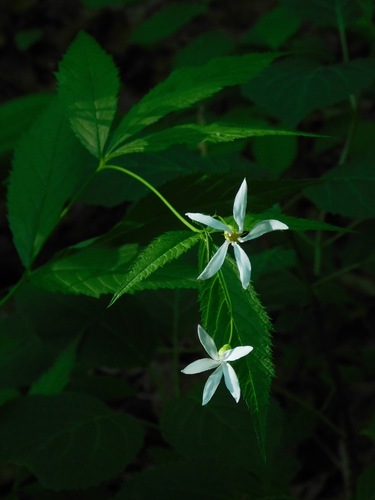
About Prunus pensylvanica L.fil.
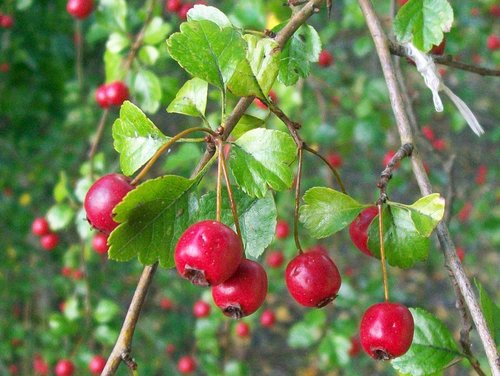
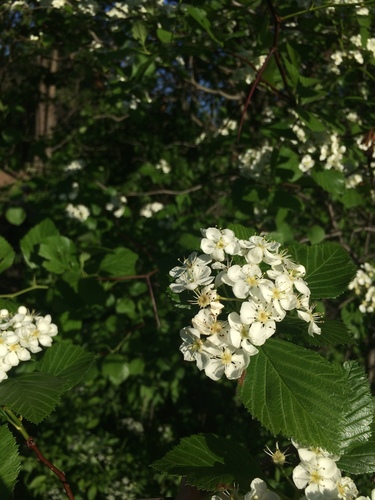
Prunus pensylvanica, also known as pin cherry, grows as a shrub or small tree, usually with a straight trunk and a narrow, round-topped crown. It usually reaches 5–15 metres (16–49 feet) tall and 10–51 centimetres (4–20 inches) in trunk diameter. Exceptional trees up to 30 m (98 ft) tall have been recorded in the southern Appalachians, and the largest specimens grow on the western slopes of the Great Smoky Mountains. Its foliage is thin, with individual leaves measuring 4–11 cm (1+1⁄2–4+1⁄4 in) long and 1–4.5 cm (3⁄8–1+3⁄4 in) wide. Flowers grow in small clusters of five to seven, and each individual flower is 1 cm (1⁄2 in) across. Its fruits are drupes, ranging from 4–8 millimetres (1⁄8–3⁄8 in) long. Each fruit holds a single seed 4–6 mm (3⁄16–1⁄4 in) in diameter, enclosed in a hard stone. This species is widespread across much of Canada, ranging from Newfoundland and southern Labrador to British Columbia and the southern Northwest Territories. It is also very common in New England and the Great Lakes region of the United States. It grows in the Appalachian Mountains as far south as northern Georgia and eastern Tennessee. Scattered populations of pin cherry also occur in the Rocky Mountains, extending south to Colorado, as well as in the Black Hills of South Dakota. Pin cherry can reproduce both sexually by seed and asexually by sprouting. Its flowers are bisexual and pollinated by insects. Seeds are dispersed by birds, small mammals, and gravity. As part of its reproductive strategy, pin cherry seeds can remain viable in soil for many years. Seeds accumulate over long periods, and viable soil seed banks can persist for 50–100 years. Asexual reproduction via sprouting often forms thickets of pin cherry plants. Pin cherry is relatively short-lived, with a lifespan of only 20 to 40 years after rapid maturation. It has a shallow root system, with roots that tend to grow laterally. It is an important food source for many animals. Moose browse it in winter across the Great Lake states and boreal forest region. While individual pin cherry plants are documented to sprout after cutting, entire pin cherry thickets are often killed if exposed to fire. However, the species as a whole is adapted to fire through its persistent soil seed banks: the soil covering protects seeds from severe heat, and fire leaves behind nutrient-rich ash that supports germination. After a fire or other major disturbance, long-dormant seeds germinate rapidly, stimulated by the altered post-fire conditions. Combined with the fast initial growth of its seedlings, these traits let pin cherry thickets dominate many recently burned areas, particularly in the northern hardwood forest. Pin cherry also serves as a food source for various Lepidoptera species.