About Prunus laurocerasus L.
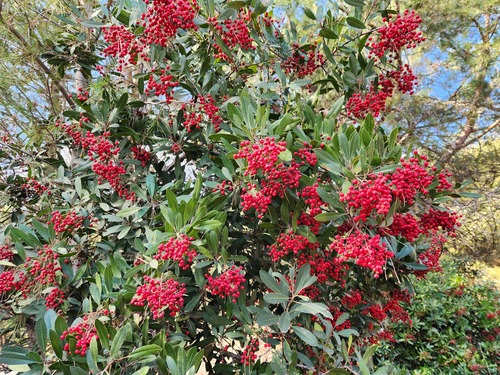
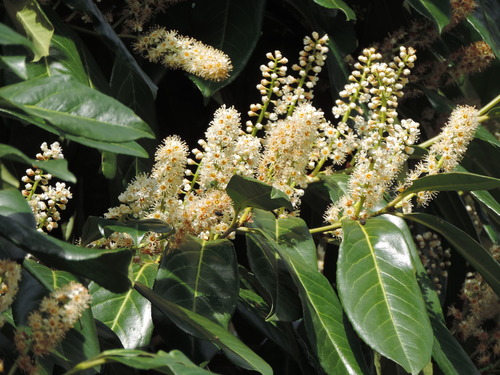
Prunus laurocerasus L. is an evergreen shrub or small to medium-sized tree, growing 5 to 15 metres (16 to 49 ft) tall, rarely reaching 18 metres (59 ft), with a trunk up to 60 cm wide. Its leaves are dark green, leathery, and shiny. They measure (5–)10–25(–30) cm long and 4–10 cm broad, with finely serrated margins. Crushed leaves give off an almond scent. Flower buds form in early spring, and open in early summer as erect 7–15 cm racemes holding 30–40 flowers. Each flower is 1 cm across, with five creamy-white petals and many yellowish stamens, and has a sweet scent. The fruit is a small cherry 1–2 cm broad, turning black when it ripens in early autumn. In Northern Ireland, the species is found as an escape in woods and shrubby areas, and it is commonly planted in parks and gardens. Populations found mainly in Turkey's Eastern Black Sea Region, particularly in Trabzon and Giresun, are categorized as endemic. Leaves and seeds can cause severe discomfort and death to humans if ingested. Historically, the plant was used for executions and political assassinations in the Roman Empire, for example by Nero. All parts of the plant, including the seeds inside the cherries, are poisonous, as they contain cyanogenic glycosides and amygdalin. This chemical composition is what produces the almond scent when leaves are crushed. Laurel water, a distillation produced from the plant, contains prussic acid (hydrogen cyanide) alongside other compounds, and is toxic. Prunus laurocerasus is a widely cultivated ornamental plant planted in gardens and parks across temperate regions worldwide. It is often used for hedges, as a screening plant, and as a massed landscape plant. Most cultivars are hardy shrubs that tolerate difficult growing conditions, including shade and drought, and respond well to pruning. The plant's foliage is also used as cut greenery for floristry. Its fruits are astringent but edible. They contain small amounts of hydrogen cyanide; any fruit that tastes bitter, which indicates higher hydrogen cyanide concentrations, should not be eaten. The seed inside the fruit, along with the leaves, contain higher concentrations of hydrogen cyanide and should never be eaten. The cyanide toxicity of this plant's seed is similar to that of the seeds of common fruits like apricot and peach.