About Prunus jamasakura (Makino) Nakai
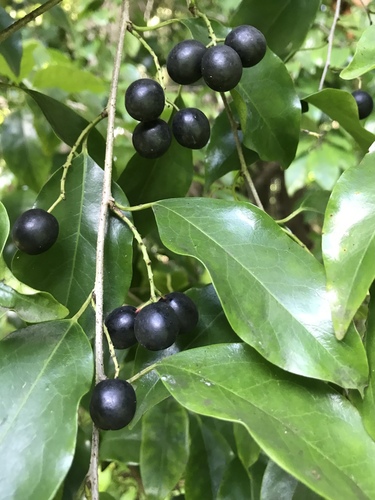
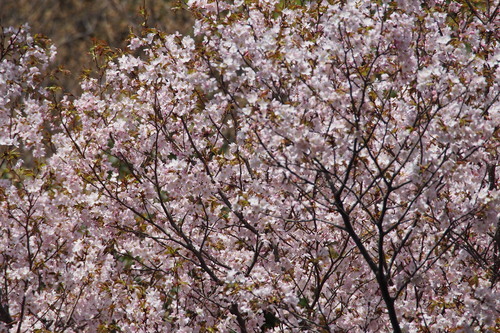
Prunus jamasakura (Makino) Nakai is a deciduous tree that reaches 20 to 25 metres (66 to 82 ft) in height. Koidzumi described the species as a normally glabrous tree, rarely pubescent. It has elliptic leaves that end in a sudden acuminate point, with sharp, setaceo-serrated edges. Most glands on the petioles are positioned towards the apex of the petiole, with two glands per petiole. Its flowers are coetaneous (opening at the same time as leaves), very rarely subprecocious, and grow in corymbose or fascicled arrangements, with a glabrous style. Koidzumi's description of the Tsukushi variety notes that it has umbels with shorter peduncles, smaller bracts, and leaf saw-teeth that are less aristate. One study examined black bear feeding on Prunus jamasakura fruit, finding that bears prefer ripe cherries (which develop 50 to 66 days after blossoming). The study found no significant difference in the germination percentage of seeds consumed by bears compared to uneaten control seeds, which suggests black bears have potential as seed dispersers for this species. Prunus jamasakura is an endemic species found in low mountains and secondary forests in Japan, ranging from the Kantō region of Honshū through Shikoku to Kyūshū. The Tsukushi variety occurs on islands surrounding Kyūshū, including Tsushima, Tanegashima, and the Tokara Islands. In South Korea, this cherry tree is grown as an ornamental. Its wood is used for construction, furniture, musical instruments, and carving. Its fruit is edible, and its bark is used for medicinal purposes.