About Prunus fruticosa Pall.
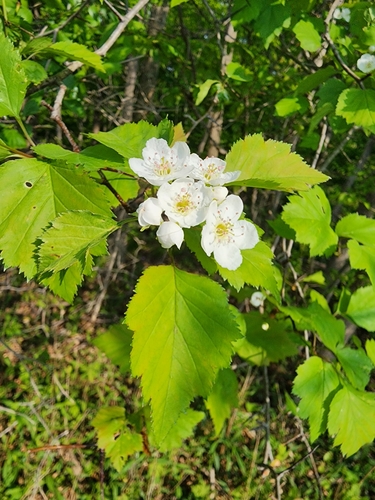
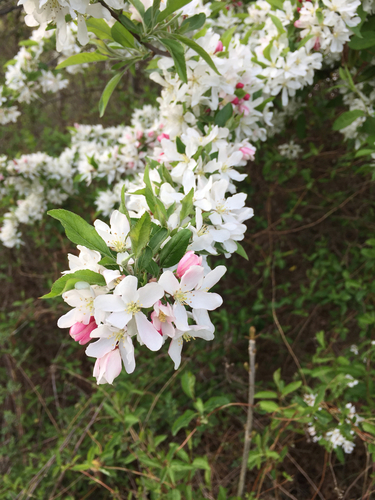
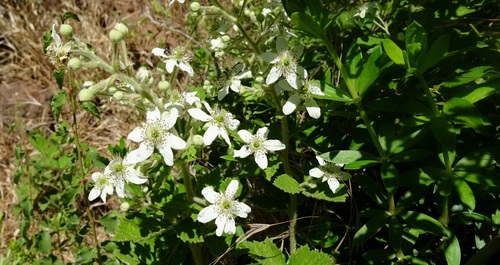
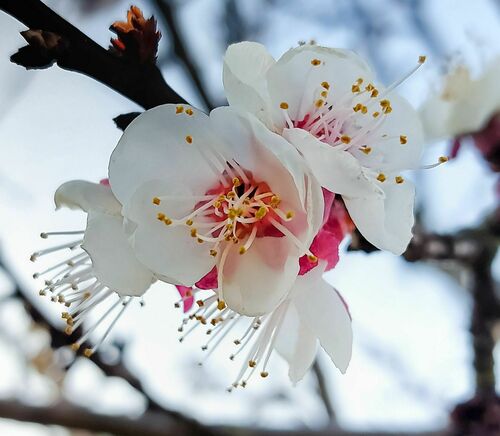
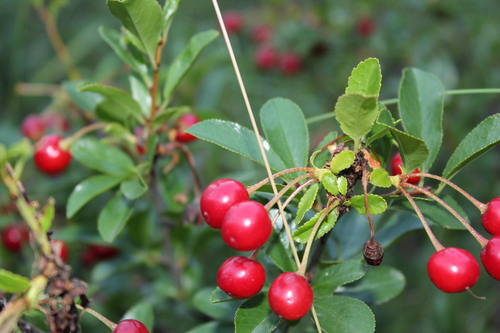
Prunus fruticosa Pall. is a shrub that reaches 1–2 metres (3–7 ft) in both height and width. It can grow in almost any soil, but grows best in loamy soil, and spreads via suckers, with an abundant root system. It requires full sun, and is classified as a steppe plant rather than a forest plant, though it can form thickets along the edges of open forest. Its bark is dark brown and marked with yellow lenticels. Its leaves are oblanceolate to obovate, measuring about 12 mm by 6 mm, with an acuminate apex. The leaves are glabrous on their upper surface, thick, and have serrated crenate margins. They are dark green during the growing season, turn yellow in autumn, and grow on short petioles. Its flowers are white hermaphroditic blossoms that grow in leafy bracts; 2 to 4 flowers appear on each short peduncle arranged in sessile umbels. These flowers are pollinated by bees, and in the Northern Hemisphere, this species flowers in May. Its fruit is light to dark red, globose to pyriform, about 8–25 mm in diameter, and ripens in August. The fruit has a sour-sweet or tart flavor. The sour fruit of this species is used in cooking, and to make jams and jellies. It also has medicinal use as an astringent, and the flowers make the plant a good honey source for beekeeping. In cultivation, Prunus fruticosa is planted in hedgerows to serve as an ornamental privacy screen and windbreak. It also acts as a host plant that supports bees, other beneficial insects, and birds. The shrub’s extensive, deep-penetrating root network makes it useful for soil stabilization in designed landscapes and habitat restoration projects. The natural hardiness of Prunus fruticosa is a desirable trait for grafting and the production of horticultural cultivars. It is grafted onto Prunus avium tree rootstock to form rounded top trees.