About Prunus armeniaca L.
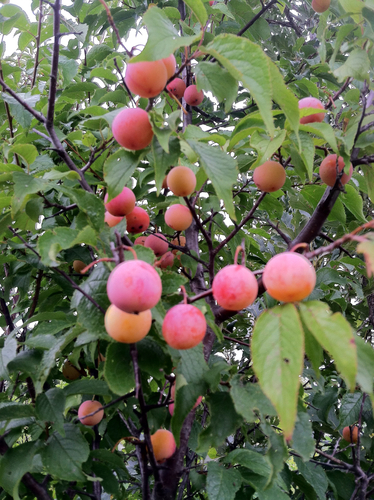
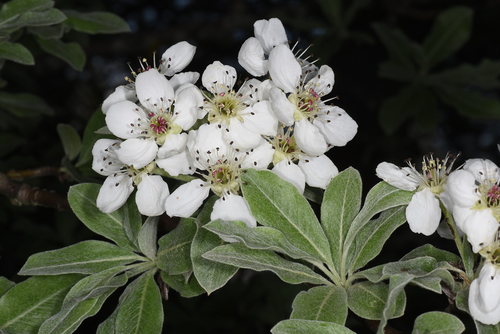
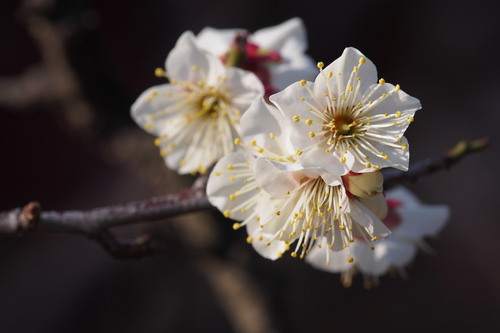
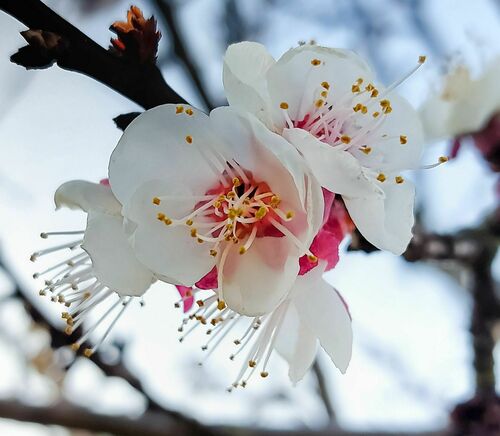
Prunus armeniaca L., commonly known as apricot, is a small tree that reaches 8–12 meters (26–39 feet) in height. It has a trunk that can grow up to 40 centimeters (16 inches) in diameter, topped with a dense, spreading canopy. Its leaves are ovate, measuring 5–9 centimeters (2.0–3.5 inches) long and 4–8 centimeters (1.6–3.1 inches) wide, with a rounded base, pointed tip, and finely serrated margin. The tree's flowers are 2–4.5 centimeters (0.8–1.8 inches) in diameter, with five white to pinkish petals. Flowers grow singly or in pairs, emerging in early spring before the leaves develop. The fruit it produces is a drupe similar to a small peach, with a diameter of 1.5–2.5 centimeters (0.6–1.0 inches), though some modern cultivated varieties grow larger fruit. Fruit color ranges from yellow to orange, often with a red tinge on the side exposed to the most sunlight. The fruit surface can be smooth, which is botanically called glabrous, or velvety with very short hairs, which is botanically called pubescent. The succulent fruit flesh, also known as the mesocarp, has a flavor that ranges from sweet to tart. Each fruit contains a single seed enclosed in a hard, stony shell commonly called a "stone"; this shell has a grainy, smooth texture except for three ridges that run down one side. Seeds or kernels of apricots grown in central Asia and around the Mediterranean may be used as a substitute for bitter almonds. The Italian liqueur amaretto and Italian amaretti biscotti get their flavor from apricot kernel extract rather than almond extract. Oil pressed from these cultivated apricot kernels, called oil of almond, has been used as a cooking oil. Apricot kernels contain between 2.05% and 2.40% hydrogen cyanide, but proper processing reduces the harmful effects enough to make consumption safe.