About Prunus angustifolia Marshall
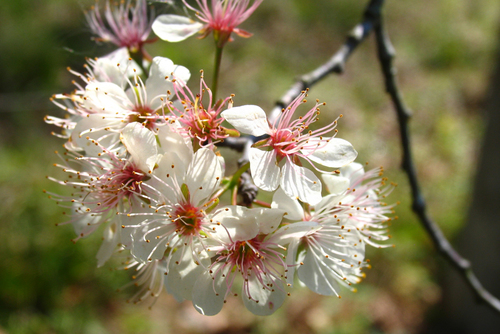
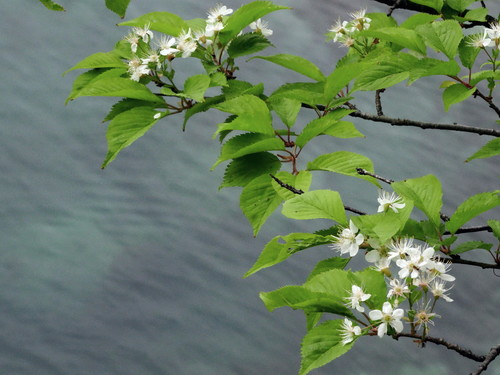
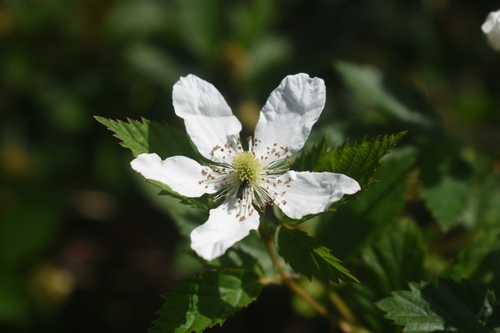
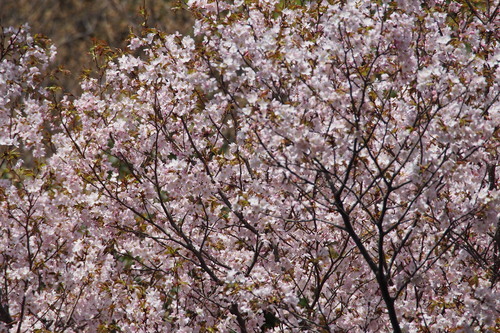
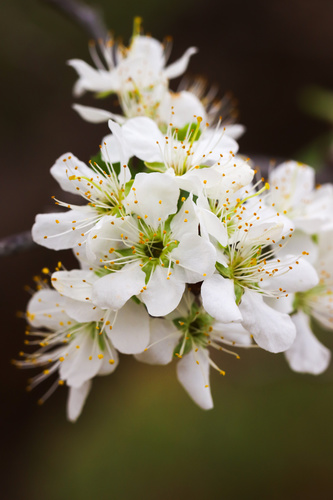
Prunus angustifolia Marshall, commonly called Chickasaw plum, grows to 3.7 to 6.1 meters (12 to 20 feet) tall, 4.6 to 6.1 m (15 to 20 ft) wide, and forms an irregular growth shape. It is naturally twiggy, with scaly, nearly black bark. Its main branches are reddish, and it has small, thorn-like side branches. Small white flowers, 8–10 millimeters (5⁄16–3⁄8 inch) wide, bloom from February through May; these flowers have five white petals with reddish or orange anthers. Along with the flowers appear small red plums, which grow up to 25 mm (1 in) long. These plums have a cherry-like appearance, are quite tart until fully ripe, and ripen in late summer. This plant requires low to moderate amounts of water, and grows well in dry, sandy or loose soil. It thrives in full regular sunlight or partial shade; plants grown in full sun grow more densely and form thick dense colonies, while plants grown in partial shade are thinner, less dense, and more spaced out. This species is very difficult to distinguish from Prunus umbellata, and hybridizes with P. umbellata easily. Prunus angustifolia is widespread across most of the eastern and central United States. Its range extends west from Florida to New Mexico and California, and north to Nebraska, Illinois, and New Jersey. There are also a small number of isolated populations in northern Michigan. This species grows in dry, sandy soils in locations including open woodlands, woodland edges, forest openings, savannahs, prairies, plains, meadows, pastures, and roadsides. The U.S. Department of Agriculture lists it as an endangered species within the state of New Jersey. Prunus angustifolia acts as a larval host for many moth and butterfly species, including the black-waved flannel moth, blinded sphinx, cecropia moth, coral hairstreak, elm sphinx, hummingbird clearwing moth, imperial moth, Io moth, polyphemus moth, promethea silkmoth, red-spotted purple, small-eyed sphinx, spring azure, striped hairstreak, and tiger swallowtail. A variety of wild animals eat its fruit, and its foliage provides cover for animal nesting sites. Chickasaw plums bloom early in spring, before most other plants bloom, and require very little maintenance. For these reasons, it is commonly used in ornamental horticulture. It often grows wild along highways, particularly in the southern United States. The 1/2-inch edible fruits turn from yellow to red when fully ripe. They can be eaten raw, and are frequently made into jellies. Because it has attractive bark, small leaves, and thin branches, Chickasaw plum is also sometimes grown as a bonsai specimen.