About Protolampra brunneicollis Grote, 1865
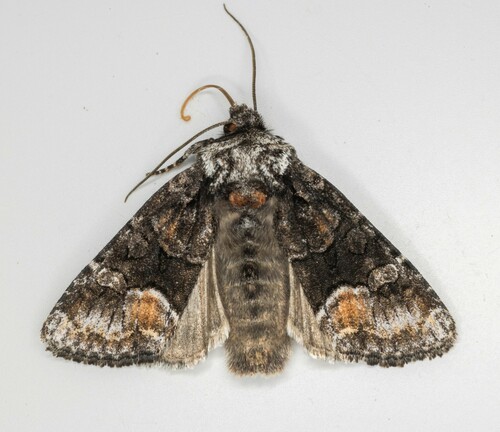
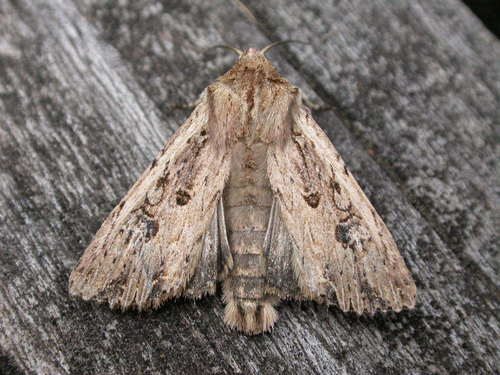
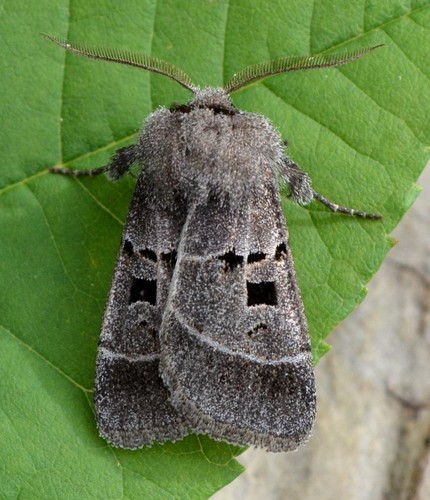
Protolampra brunneicollis, commonly known as the brown-collared dart, is a moth species that belongs to the family Noctuidae. This species was first described by Augustus Radcliffe Grote, and was formally named in 1865. It is distributed in eastern North America, ranging from New Brunswick to Alberta in southern Canada. In the United States, it occurs from Maine to North Carolina and Tennessee, west to Mississippi, and north to Minnesota, with scattered western records from North Dakota, South Dakota, and Montana. The wingspan of this moth is approximately 35 millimeters. Adult moths are active between June and September. It is uncertain whether this species has two generations per year, or just one generation with aestivating adults. The larvae of Protolampra brunneicollis feed on a broad variety of low-growing herbaceous and woody plants, including blueberry, clover, dandelion, sweet-fern, and tobacco. Larvae have been successfully reared on plants of the genus Vaccinium, on Taraxacum officinale (dandelion), and on Comptonia peregrina (sweet-fern).