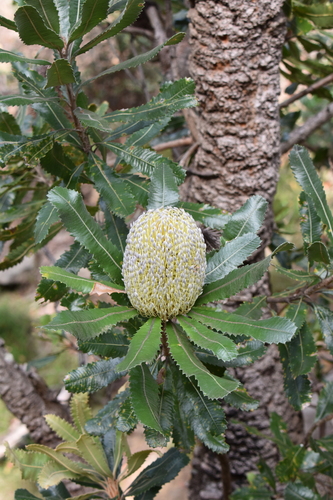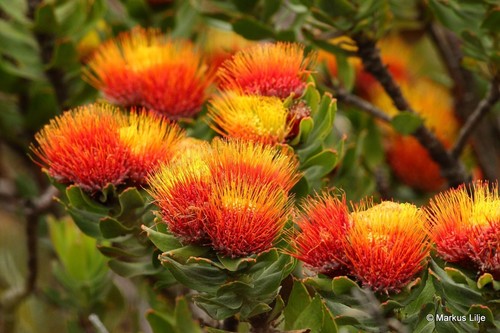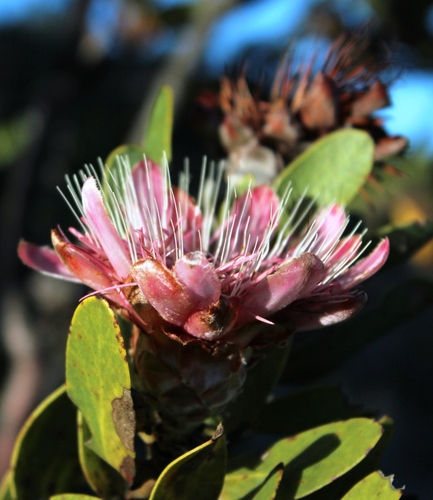
About Protea punctata Meisn.
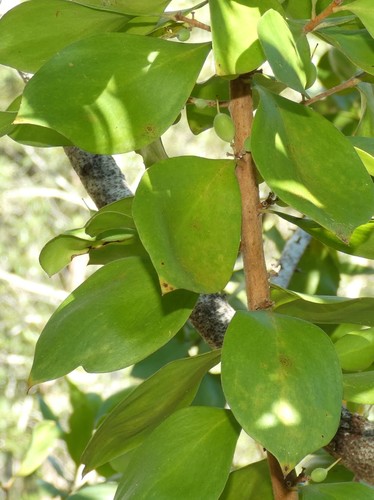
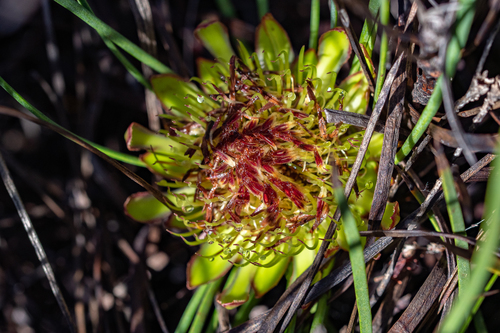
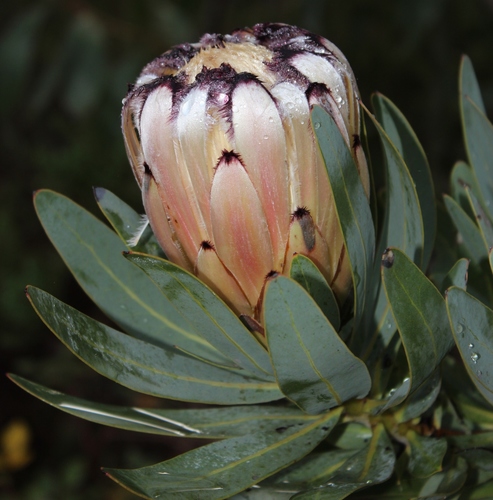
Protea punctata Meisn. is a large, erect shrub that can grow up to four metres tall. It has quite broad leaves, and blooms from late summer to early winter, between December and June, with peak flowering occurring in autumn from March to April. This species is monoecious, meaning each individual flower contains both male and female sexual structures. Its fruit is persistent. This plant is endemic to South Africa, where it occurs in both the Eastern and Western Cape provinces. Its range extends from the Cederberg to the Riviersonderend Mountains, and it can also be found in the Swartberg, Baviaanskloof, Kammanassie and Kouga Mountains, including at Swartberg Pass. It grows in seeps in shale or sandstone-derived soils, at altitudes between 1,200 and 2,000 metres. It most commonly grows in many different types of fynbos habitat, but has also been found growing directly on shales. Mature plants of this species are killed by wildfires that naturally occur in its native range, but their seeds can survive these fires. Birds act as pollinators for this plant. Its seeds are stored in a cap until they ripen, after which they are released. Once released, the seeds are dispersed by wind. Adult Table Mountain pride butterflies (Aeropetes tulbaghia) sometimes feed from its flowers.