About Protea magnifica Andrews
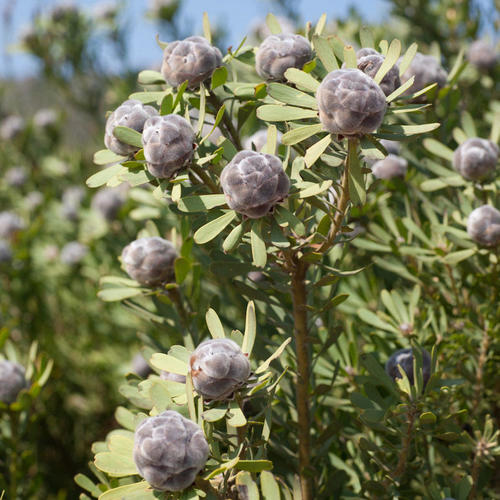
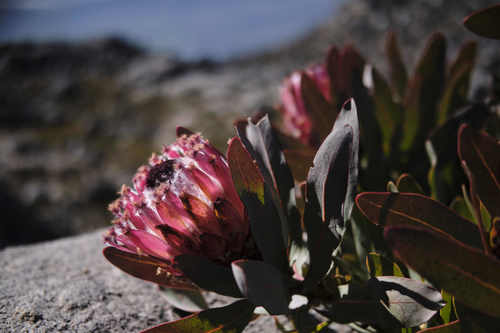
This species, scientifically named Protea magnifica Andrews, grows as either an erect or sprawling shrub, reaching a maximum height of 2.5 metres (8.2 ft). Its flowering structures are specialized pseudanthia, also called flower heads, which hold hundreds of small reduced flowers known as florets. This plant is monoecious, with both male and female reproductive structures present in each individual flower. It blooms in spring, from June through January. Its fruit, which holds a single seed, stays inside the old, dried infructescence that remains persistently on the plant. This plant is endemic to the Cape Region of South Africa, and is found only in the Western Cape province. Its range covers mountain ranges from Koue Bokkeveld to Hottentots Holland, as well as Klein Swartberg, Riviersonderend, Franschhoek, and the central Langeberg. It grows in scattered isolated stands across this range. It grows at high mountain elevations, on hot, dry mountain slopes located near the snow line, at altitudes between 1,200 and 2,700 metres. It grows exclusively in fynbos habitat, but can be found in many different sub-types of fynbos. It most often grows in substrates derived from sandstone, though it may occasionally grow on quartzite. Birds act as pollinators for this species. Periodic wildfires that pass through its native habitat kill the adult shrubs, but the plant's seeds are able to survive these fires. After being released from the plant, the seeds are dispersed by wind. Protea magnifica is considered the most highly prized cut flower in the floral trade. As of 1998, the highest quality flower heads were still reported to come from wild-grown plants, and wild flower heads were often harvested for commercial cut flower use.