About Procellaria cinerea Gmelin, 1789
Common and Scientific Name
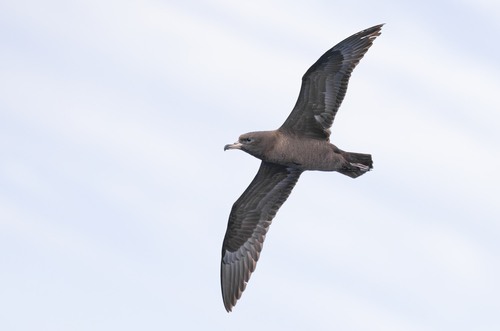
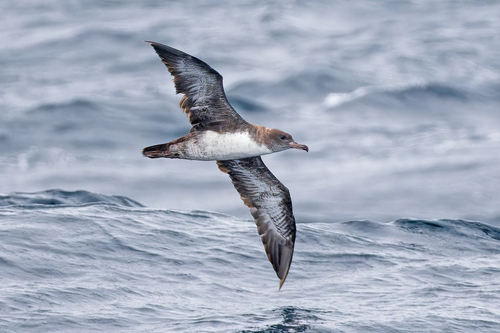
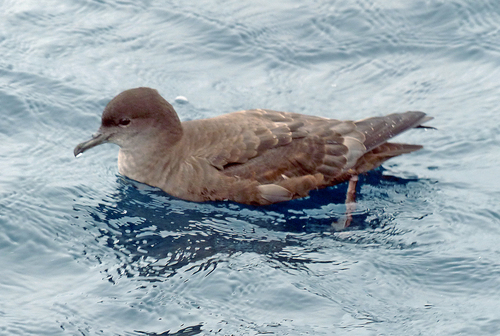
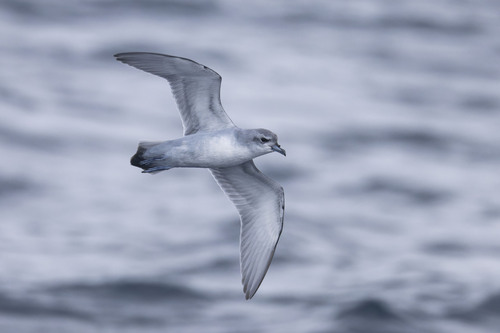
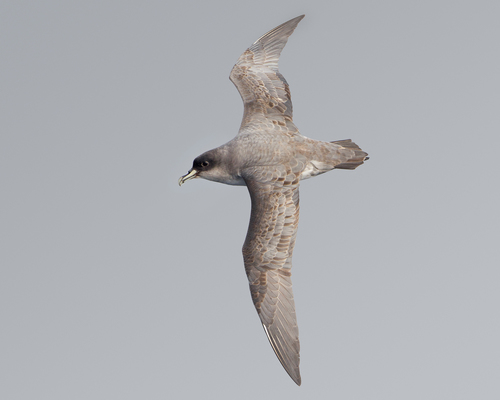
The grey petrel (Procellaria cinerea Gmelin, 1789) is a large petrel with plumage in shades of grey, white, and brown.
Adult Size Measurements
Adults average 50 cm (20 in) in length, have a wingspan of 115–130 cm (45–51 in), and weigh approximately 1,000 g (35 oz).
Plumage Coloration
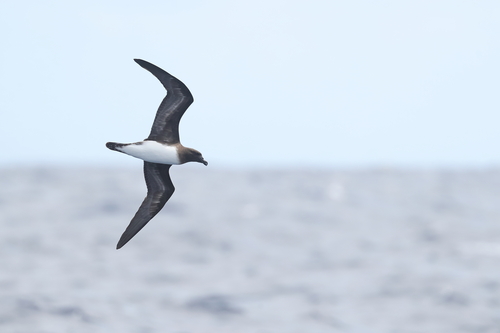
Its mantle, back, uppertail coverts, and upperwings are brownish-grey; its belly is white; and its underwings and undertail are ash-grey.
Bill and Feet Color
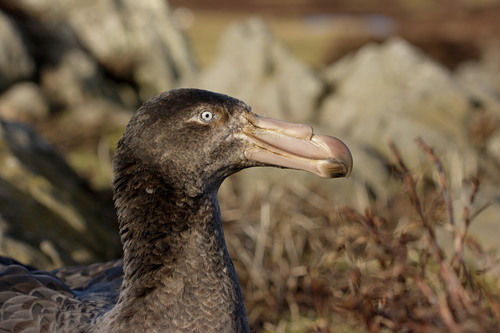
It has a yellow-green bill and pink-grey feet.
Taxonomic Order Affiliation
As a member of the order Procellariiformes, it shares the order's characteristic identifying features.
Nasal Passage Feature
First, members of this order have nasal passages called naricorns that attach to the upper bill.
Bill Structure
Their bills are also uniquely split into between seven and nine horny plates.
Stomach Oil Production
Procellariiformes produce a stomach oil made of wax esters and triglycerides, which is stored in the proventriculus.
Stomach Oil Functions
This oil can be sprayed from the mouth to defend against predators, and also acts as an energy-rich food source for chicks and for adult birds during long flights.
Salt Gland Adaptation
Finally, they have a salt gland located above the nasal passage that helps remove excess salt from their bodies, an adaptation to the large amount of ocean water they take in; the gland excretes a high-salinity solution through the nose.
Habitat Type
Grey petrels are pelagic.
Non-breeding Range
During the non-breeding season, they typically range between 32°S and 58°S.
Breeding Colony Location
In the breeding season, they form breeding colonies on multiple islands.
Largest Breeding Colonies
The largest colonies are on Antipodes Island, with an estimated 53,000 breeding pairs, and Gough Island, with 10,000 breeding pairs.
Smaller Breeding Colonies
Smaller colonies are also found on the Prince Edward Islands, Marion Island, Tristan da Cunha, Crozet Islands, Kerguelen Islands, Amsterdam Island, Campbell Island, and Macquarie Island.
Overall Occurrence Range
The species has an overall occurrence range of 68,800,000 km2 (26,563,829 sq mi).