About Pouteria caimito (Ruiz & Pav.) Radlk.
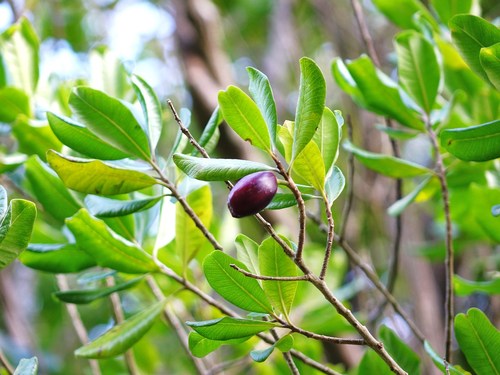
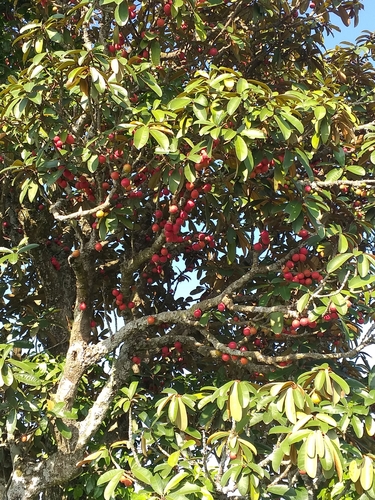
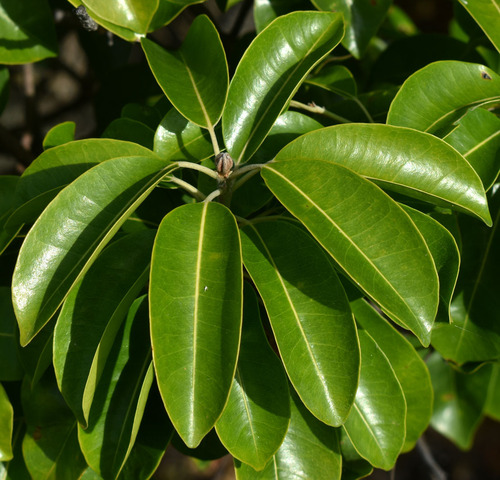
Pouteria caimito (Ruiz & Pav.) Radlk., commonly called abiu, grows to an average height of 10 metres (33 feet), and can reach up to 35 metres (115 ft) when grown under good conditions. Its leaves range in shape from oblong to elliptical, and measure 10–20 centimetres (4–8 inches) in length and 3.5–6.5 cm (1+1⁄2–2+1⁄2 in) in width.
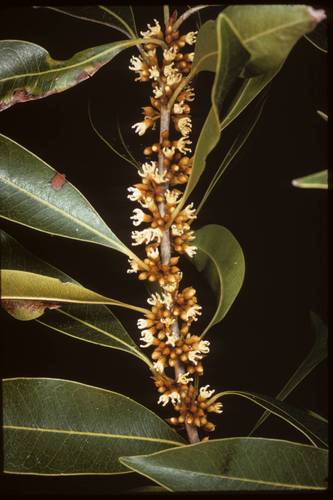
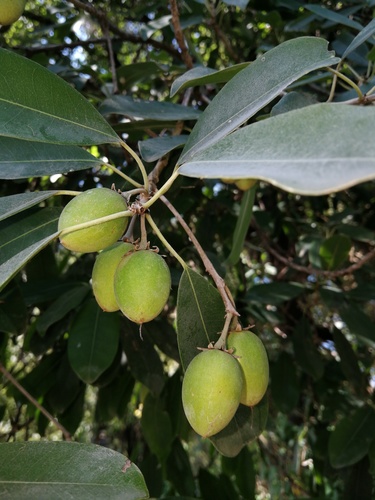
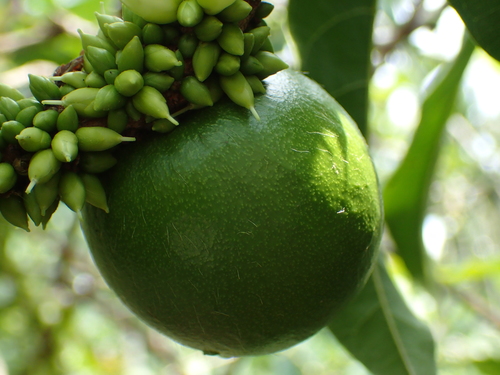
Abiu can have multiple flowering periods per year, and a single tree may hold both flowers and fruit at the same time. It takes approximately 3 months from flowering for fruit to ripen, and the main crop season varies depending on local climate. Flowers grow either singly or in clusters of 2 to 5, emerging from leaf axils on long, thin shoots. The flowers are small, with 4 to 5 cylindrical petals that range in color from white to greenish. All flowers are hermaphroditic, containing both male and female reproductive parts. Flowers open in the morning and remain open for around two days.
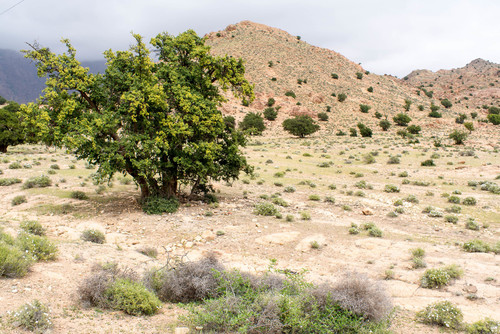
P. caimito is widely recognized as native to the headwaters of the Amazon. It grows wild on the lower eastern slopes of the Andes from southwestern Venezuela to Peru, and is common around Tingo Maria, Iquitos, and in the Province of Guayas, Ecuador, where it is sold in local markets. It was cultivated by Amerindians and became widespread across the Amazon, but the origin of its distribution outside the Amazon basin is unconfirmed. Within the Amazon basin, it grows abundantly in the northern Brazilian state of Pará, and occurs sparsely in Atlantic rainforest collections near Rio de Janeiro and Bahia. It also grows in Caquetá, Meta, and Vaupés regions of Colombia, is plentiful in Amazonas, Venezuela and Cuba, and has grown in Trinidad for a very long time. It is endemic to parts of Southeast Asia, including Indonesia and the Philippines.
Abiu grows best in tropical habitats with a year-round warm, moist climate. Today it can be found across most of the Amazon basin. It is a common dooryard tree grown in backyards and along streets in many Brazilian towns, but is not usually grown commercially. It has been introduced outside of the Americas; for example, it has been grown on the Pacific island of Tahiti since 1993. While it thrives in warm, moist conditions, it can grow well in the somewhat cooler climate of Rio de Janeiro. In Peru, it cannot grow above 610 metres (2,000 ft) elevation, while in Colombia it has been found growing up to 1,800 m (6,000 ft).
For cultivation, the tree grows best in tropical areas with year-round warm, moist conditions, and is slightly less hardy than related sapotes such as canistel and sapodilla (nispero). Within the United States, it grows well in South Florida as far north as Palm Beach County, and has survived brief freezes. It prefers wet, slightly acidic soil with high organic content, and may develop iron deficiency (chlorosis) when grown in alkaline soils. Newly planted trees are fragile and require protection from wind and cold weather. Only light pruning is needed, and fertilization should be frequent but light.
The wood of the abiu tree is dense, heavy, and hard, and is used as lumber for construction.