About Potentilla verna L.
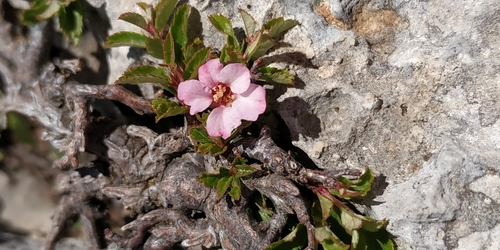
This entry covers the genus Potentilla (cinquefoils), with the scientific name Potentilla verna L. specified. Cinquefoils generally look very similar to strawberries, but most have dry, inedible fruit, which is why some species are called "barren strawberry". Many cinquefoil species have palmate leaves. Some species only have three leaflets, while others have fifteen or more leaflets arranged in a pinnate pattern. Flower color is usually yellow, but can also be white, pinkish, or red. Their accessory fruits are usually dry, but may be fleshy and strawberry-like; the actual seeds, each technically a separate individual fruit, are tiny nuts. Cinquefoils grow wild across most cool and cold regions of the world. Most species are herbaceous perennials, while a small number are either erect or creeping shrubs. Some cinquefoils are considered troublesome weeds, and other types are cultivated in gardens. Cinquefoils form a prominent component of many ecosystems. In the United Kingdom alone, common tormentil (Potentilla erecta), together with purple moor grass (Molinia caerulea), defines many grassy mires, and grows abundantly in typical deciduous forests alongside downy birch (Betula pubescens), common wood sorrel (Oxalis acetosella), and sessile oak (Quercus petraea). In upland pastures on calcareous soil, it typically grows alongside common bent (Agrostis capillaris), sheep's fescue (Festuca ovina), and wild thyme (Thymus praecox). It is most commonly found in regions dominated by common heather (Calluna vulgaris), including common lowland heaths with bell heather (Erica cinerea), maritime heaths with spring squill (Scilla verna), submontane heaths dominated by red peat moss (Sphagnum capillifolium) and common bilberry (Vaccinium myrtillus), and the mountain heathlands of Scotland with alpine juniper (Juniperus communis ssp. alpina). The leaves of cinquefoils are eaten by the caterpillars of many Lepidoptera, most notably grizzled skippers of the genus Pyrgus, which are butterflies in the skipper family. Adult butterflies and moths visit cinquefoil flowers; for example, the endangered Karner blue butterfly (Plebejus melissa samuelis) takes nectar from common cinquefoil (Potentilla simplex). The Polish cochineal (Porphyrophora polonica), a scale insect historically used to produce red dye, lives on cinquefoils and other plants across Eurasia. Some, but not all, cinquefoils are pollinated by insects, and produce nectar that attracts bees, hoverflies, muscid flies, butterflies, true bugs, and ants.