About Potentilla recta L.
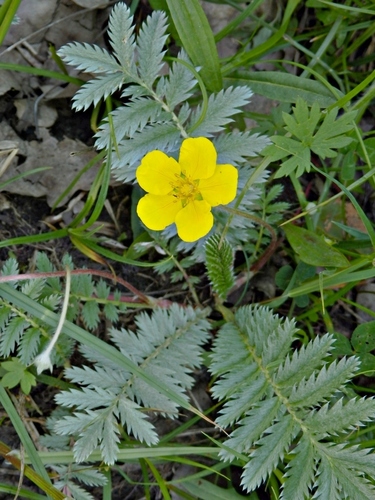
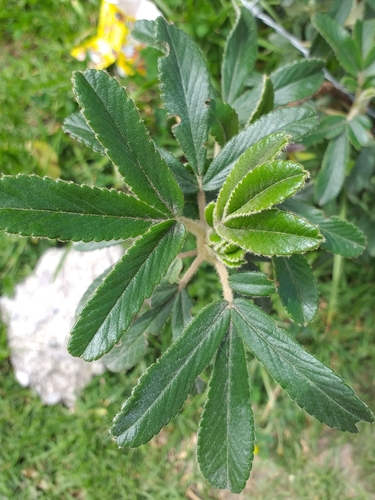
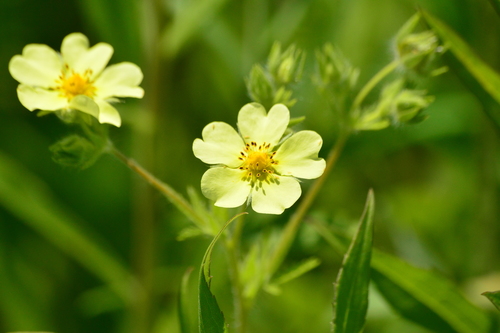
Sulphur cinquefoil, scientifically named Potentilla recta L., is a tufted perennial herb that grows from a woody taproot or caudex. It produces upright to erect leafy stems that reach up to 80 cm (31 in) tall. The upper section of the stem is branched, densely covered with non-glandular hairs, and also bears some glandular hairs. Lower leaves have long stalks, while stem leaves are arranged alternately and have short stalks. All leaves are palmate, most often divided into six or seven leaflets, and sometimes into up to nine; the uppermost leaves only have three leaflets. Leaves range in color from green to yellow-green, and can grow up to 15 cm (6 in) long, with the central leaflet reaching up to 8 cm (3.1 in) in length. Leaflets are linear-lanceolate, hairy in texture, and toothed along their edges. The inflorescence is a cyme holding several flowers, which are generally light to pale yellow; individual plants with white or gold flowers occur occasionally. Each flower has five calyx lobes, five broad, shallowly-notched petals, thirty stamens, many pistils, and a separate gynoecium. The fruit is a receptacle that holds several glossy, pale brown achenes. This plant can reproduce by seed, or vegetatively by sprouting new shoots from its caudex. Sulphur cinquefoil flowers from June to August. Sulphur cinquefoil is native to much of Europe, Asia, and parts of North America, and occurs as an introduced species in other parts of the world. Its natural habitat includes arable fields, gardens, banks, hedgerows, wasteland, logging clearings, loading areas, and occasionally shores. In Turkey, Potentilla recta is traditionally used as a tonic.