About Potentilla pusilla Host
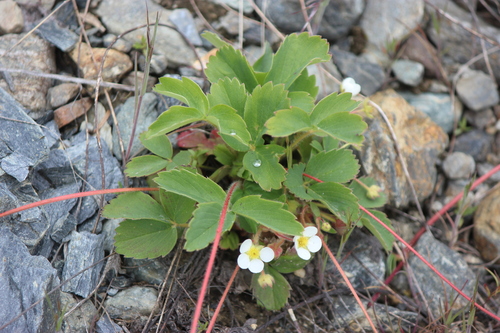
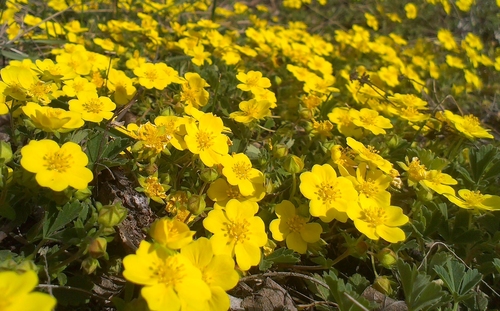
Potentilla pusilla Host, commonly known as spring cinquefoil or spotted cinquefoil, is a perennial flowering plant belonging to the rose family Rosaceae. It reaches a mature height of 5–15 cm (2–6 in). This species was first formally described scientifically by H.G.L. Reichenbach in 1832. P.F.A. Ascherson later reclassified it as P. tabernaemontani, and this name is now considered invalid. The name P. verna has been incorrectly applied to this species; the original P. verna described by Linnaeus actually refers to alpine cinquefoil, P. crantzii. This is a relatively unremarkable cinquefoil species. It bears characteristic five-fingered leaves and five-petalled yellow flowers (which appear in early spring) on low-growing stems. As its common name suggests, it is one of the first cinquefoil species to bloom across most of its range. It can grow in dry, marginal habitats including roadsides, meadows, and talus. It is used in rock gardens, where it produces bright yellow clumps of bloom when few other plants are flowering.