About Porzana pusilla (Pallas, 1776)
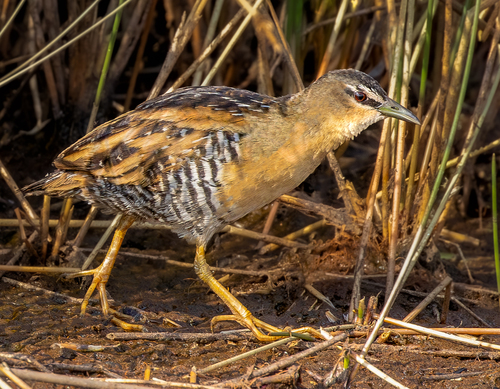
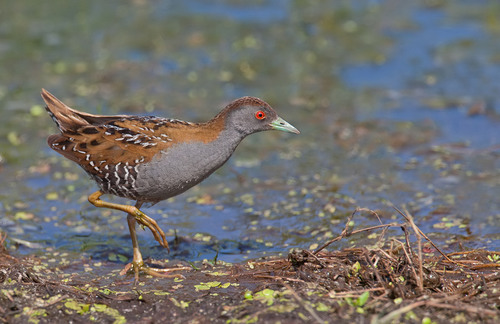
Baillon's crake, with the scientific name Porzana pusilla (Pallas, 1776), measures 16–18 cm (6.3–7.1 in) in length. It is similar in appearance to the slightly larger little crake. This species has a short straight bill that is yellow or green, with no red base at the base. Adult Baillon's crakes have mostly brown upperparts marked with some white patches, along with a blue-grey face and underparts. The rear flanks are barred black and white, and the species has green legs with long toes, plus a short tail that is barred on its underside. Immature Baillon's crakes look similar to adults, but their underparts are extensively barred. Downy Baillon's crake chicks are black, which matches the appearance of downy chicks of all rail species. Baillon's crake breeds in sedge beds across Europe (mostly eastern Europe) and throughout the Palearctic. Up until the mid-19th century, the species regularly bred in Great Britain, but the western European population declined due to drainage of wetland habitats. In recent years, populations have recovered in north-western Europe: the species has recolonised Germany and the Netherlands, breeding is suspected to have resumed in Britain, and a 2012 Irish record marked the first confirmed sighting there since the 1850s. This species nests in a dry spot within wet sedge bogs, and lays clutches of 4–8 eggs. It is a migratory species that winters in east Africa and south Asia, though it also exists as a resident breeding species in Africa and Australasia. There is only one confirmed record of Baillon's crake in North America, from Attu Island in September 2000.