About Porzana parva (Scopoli, 1769)
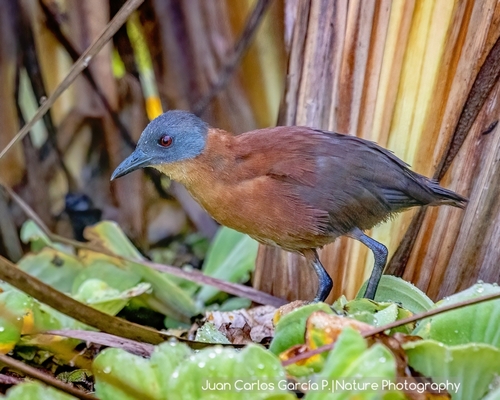
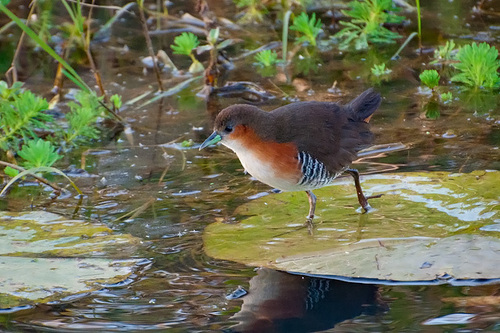
The little crake, currently classified under the genus Zapornia with the scientific name Zapornia parva, was long placed in the genus Porzana; its original scientific name was Porzana parva (Scopoli, 1769). The specific epithet parva means "small" in Latin. It is a very small waterbird in the family Rallidae. Its breeding habitat consists of reed beds, located across Europe (mainly eastern Europe) and extending just into western Asia. This is a migratory species that winters in Africa. Adults measure 17–19 cm (6.7–7.5 in) in length, making them slightly smaller than the spotted crake. Little crakes can be easily distinguished from spotted crakes by the lack of dark barring and white spots on their flanks. The little crake has a short straight bill that is yellow with a red base, green legs with long toes, and a short tail that is barred black and white underneath. Unlike other Zapornia crakes, this species displays strong sexual dimorphism. Adult males have mostly brown upperparts, and blue-grey face and underparts. They look similar to the sympatric Baillon's crake (Z. pusilla), which has strongly barred flanks and is slightly smaller. Females have buff underparts, and only their face is grey; they more closely resemble the yellow-breasted crake (Z. flaviventer) found in the American tropics. Immature little crakes resemble females, but have a white face and breast. As is true for all rails, downy little crake chicks are black. These birds forage by probing with their bill in mud or shallow water, and also pick up food by sight. They mainly eat insects and aquatic animals. Little crakes are very secretive during the breeding season, and are most often heard rather than seen. They are easier to observe when they are on migration. They are noisy birds, with a yapping kua call. They nest in a dry location within reed vegetation, and lay clutches of 4–7 eggs. The little crake is one of the species covered by the Agreement on the Conservation of African-Eurasian Migratory Waterbirds (AEWA).