About Pooecetes gramineus (J.F.Gmelin, 1789)
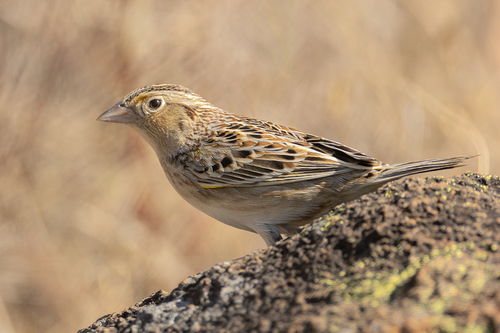
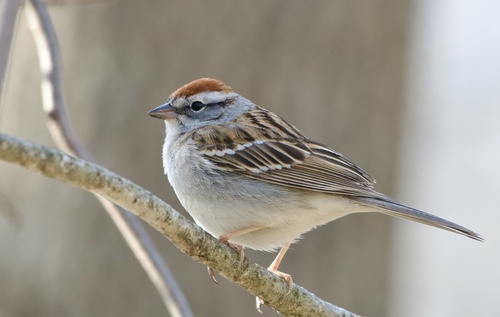
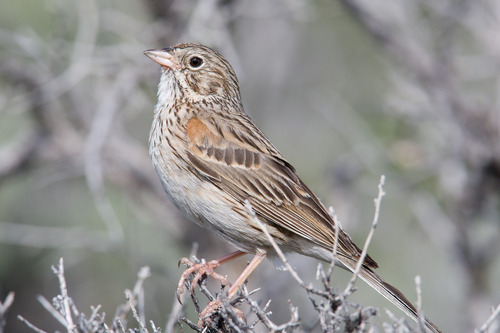
The vesper sparrow (Pooecetes gramineus) measures 14–16 cm (5.5–6.3 in) in total length and weighs 19.5–28.3 g (0.69–1.00 oz). Adult individuals have light brown upperparts and light underparts, both marked with darker streaking. Three unique features distinguish the vesper sparrow: first, a small white ring surrounding the eye; second, a flash of white tail feathers visible when the bird is in flight; third, a chestnut patch on the shoulder, though this marking is usually not visible to observers. An additional notable characteristic is that some vesper sparrows, especially those found west of the Cascades, typically have a more pinkish overall hue. Vesper sparrows also lack the bold eyeline present in some other sparrow species. Males sing from elevated perches such as shrubs or fenceposts to signal ownership of their nesting territory. Their musical song opens with two pairs of repeated whistled notes, and ends with a series of trills that are somewhat similar to the song of the song sparrow. The song includes slurred whistles that start at a lower pitch and move to a higher pitch, and vesper sparrows also incorporate short descending trills into their songs. Vesper sparrows are primarily found across Canada and most of the northern United States. Unlike some other sparrow species that share their range, vesper sparrows inhabit lower-elevation grassy areas including dry grasslands, sagebrush, and fields. Around September each fall, vesper sparrows migrate to the eastern United States, central United States, Mexico, and the Gulf Coast. They return to their northern breeding ranges in March as spring arrives.