About Polystichum lonchitis (L.) Roth
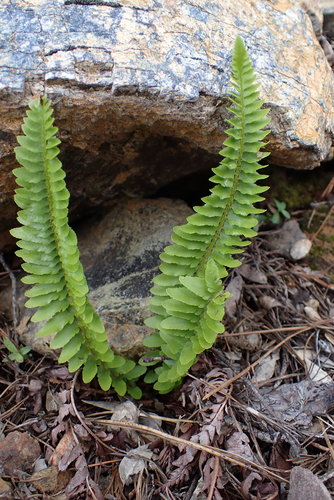
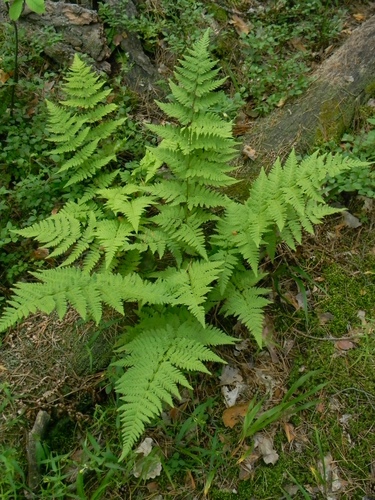
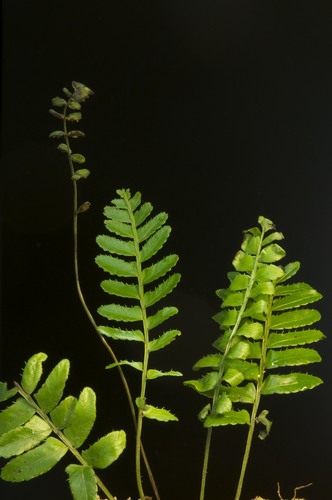
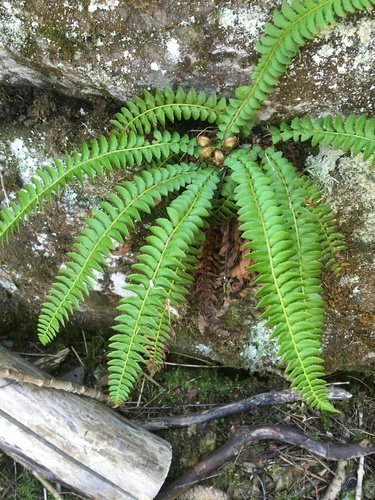
This tufted fern, scientifically named Polystichum lonchitis, produces several erect, linear fronds that can reach up to 60 centimetres (24 inches) in length. In shadier growing locations, fronds may be held horizontally instead of erect. The fronds themselves are glossy, stiff, and pinnate, bearing many lance-shaped to oblong pinnae (leaflets) up to 3 or 4 centimetres (1.2 or 1.6 inches) long. The longest pinnae are found near the midpoint of the frond, while the basal pinnae are smaller and triangular. Pinnae overlap one another slightly, and their margins are toothed with prominent outward-pointing spines. Rounded sori with a whitish to gray indusium (covering) are arranged in two rows on the underside of each pinna. Polystichum lonchitis is a slow-growing, long-lived plant. Commonly called holly fern, it is an arctic-alpine species with a circumpolar boreal and montane distribution across the Northern Hemisphere. It grows best in calcareous soil, in cool, damp sites including at the base of cliffs, on rock ledges and in rock crevices, among boulders, and in deep cavities of limestone pavements. It will also grow on other types of rock as long as the growing medium is not calcium deficient. In the British Isles, it occurs in Scotland, the western fringes of England, Wales, and Ireland, and grows at scattered locations elsewhere in the region. It is found at only one location in Northern Ireland: Lough Navar Forest Park in County Fermanagh. Due to its rarity there, it is listed as a Northern Ireland Priority Species.