About Polyporus australiensis Wakef.
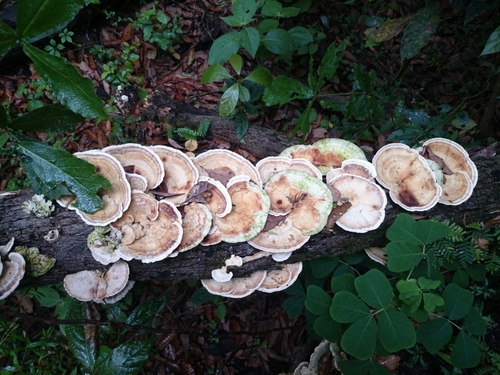
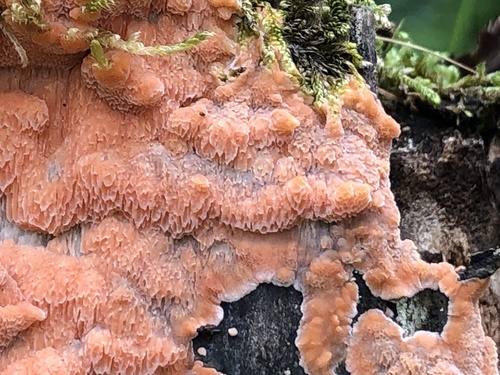
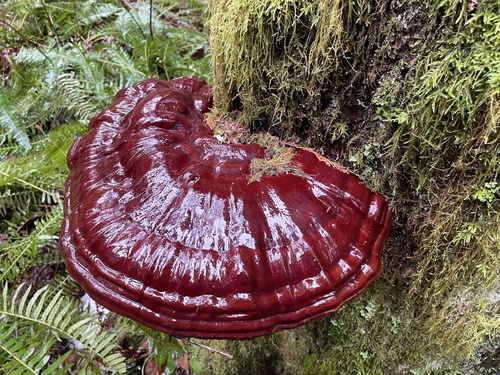
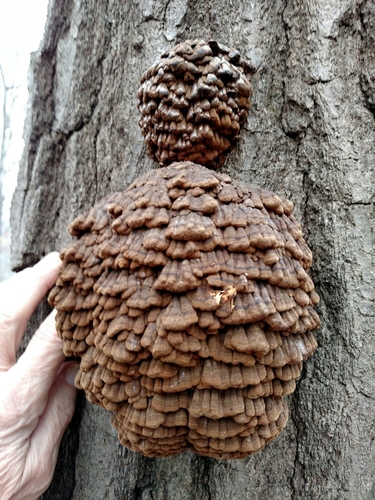
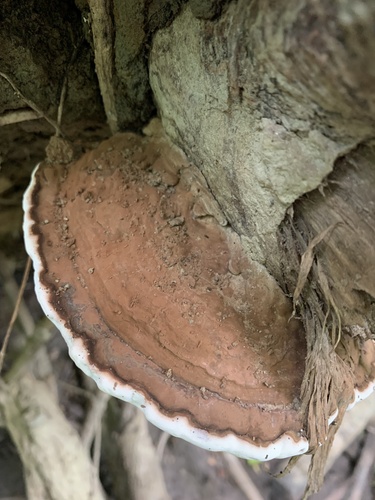
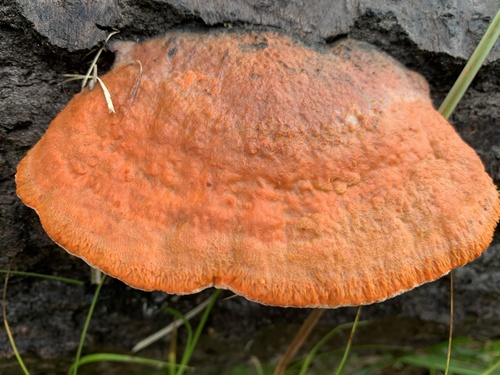
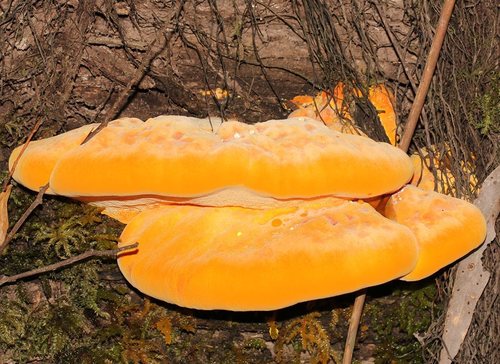
Polyporus australiensis Wakef. has an irregular to semicircular cap that ranges from flat to convex in shape. The cap can reach up to 20 centimeters (8 in) wide and 8 cm (3+1⁄4 in) tall, and projects up to 17 cm (6+1⁄2 in) out from its growing surface. When young, the cap is white, and it stains yellow, orange, or brown as it ages. The cap texture is soft but tough, and its surface may be smooth, ridged, or pitted; it feels greasy when wet. The cap margin is smooth and incurved. The pores number between 1 and 10 per millimeter, and can be round, angular, or irregular in shape. They start saffron-yellow when young, turning to orange then rusty-brown as they age, and weep saffron-yellow juice when wet. This species has no stem, and instead attaches laterally to its growing substrate via a broad base. When old or dry, it produces a strong, persistent curry-like scent. Bruce A. Fuhrer notes that this species, often referred to under the synonym Piptoporus australiensis, is commonly called Curry Punk for its persistent curry-like odour that remains even when the fungus is old and dry. Unlike other spongy polypores, this species does not appear to be attacked by insects. Its large bracket-shaped fruiting bodies grow on logs, particularly logs that have been charred by fire, and it causes brown cubical rot in the wood it colonizes.