About Polypodium appalachianum Haufler & Windham
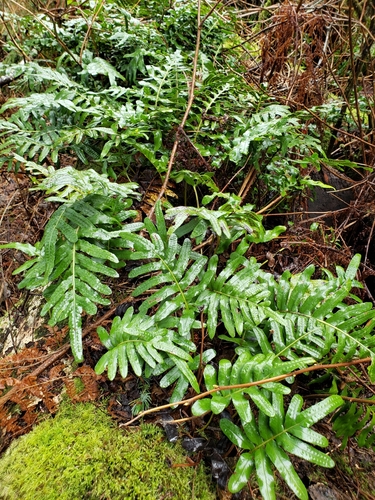
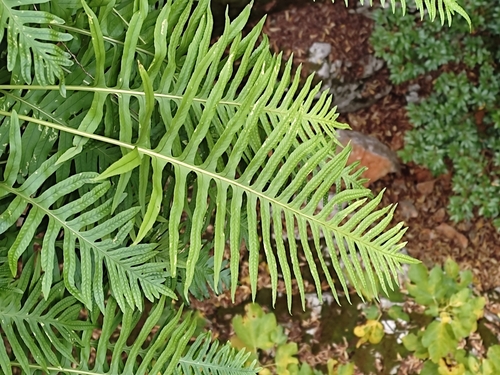
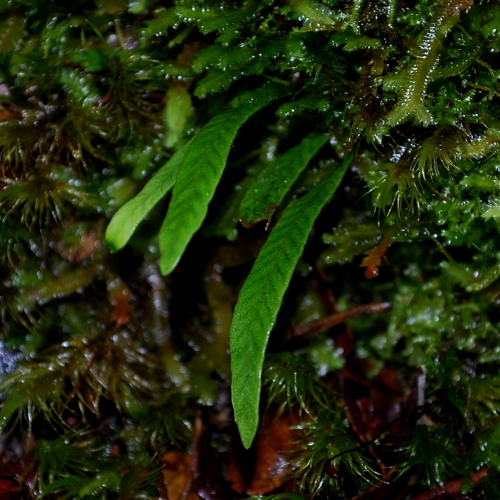
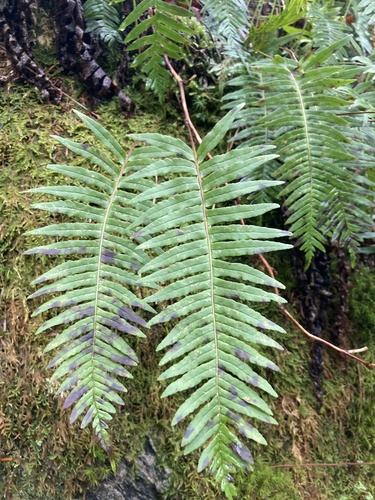
Polypodium appalachianum Haufler & Windham is a fern species native to eastern North America. It is commonly known as the Appalachian polypody or Appalachian rockcap fern, and it looks very similar to Polypodium virginianum. For many years, P. virginianum (which was long treated as a variety of the British species Polypodium vulgare) was known to contain cryptic races represented by diploid, triploid, and tetraploid cytotypes. Triploid specimens produced abortive spores, indicating they were hybrids between the diploid and tetraploid groups. In 1991, researchers clarified that the type specimen of P. virginianum belongs to the tetraploid cytotype. P. virginianum is an allotetraploid species of hybrid origin, with the previously unnamed diploid cytotype as one of its parents. This diploid species was formally named P. appalachianum. The other parent of P. virginianum was identified as Polypodium sibiricum. The tetraploid hybrid-derived species tolerates warmer climates than both of its parent species. P. sibiricum is also confirmed to be one of the parent species of the allotetraploid Polypodium vulgare, alongside Polypodium glycyrrhiza. P. appalachianum is an epipetric plant that grows on rock, and it prefers sandstone or other hard, noncalcareous rocks. It has also been recorded growing as an epiphyte in the Smoky Mountains. Across most of its range, P. appalachianum grows in locations more sheltered from sun and heat than P. virginianum. Both P. appalachianum and P. virginianum, as well as their hybrid, can form large clonal colonies. These colonies grow into dense mats that hold organic matter in place on rock shelves and rock surfaces.