About Polyphylla fullo (Linnaeus, 1758)
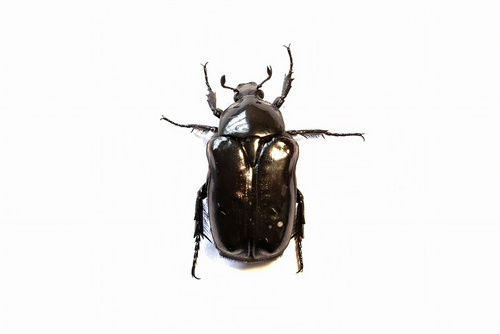
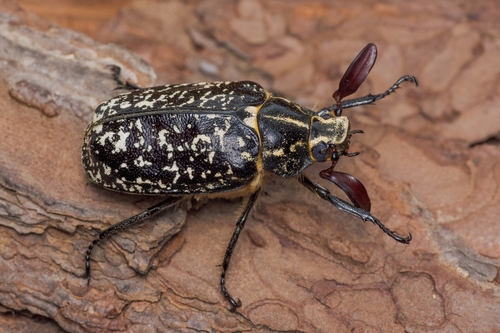
Polyphylla fullo (Linnaeus, 1758) is the largest species of European Melolonthinae, reaching up to 38 millimeters in length. Its body is robust, convex, and ranges in color from more or less reddish-brown to blackish. The entire body is covered in fine white pubescence that forms distinct marbled spots. Like other species in the Polyphylla genus, males have an enlarged antennal "fan". This feature gives the beetles a distinctive appearance, and it is the origin of the genus name Polyphylla, which means "many leaves". Adult P. fullo live and feed on pine foliage, while the larvae feed on the roots of grasses and sedges, which belong to the families Graminaceae and Cyperaceae respectively. This species is distributed across North Africa, Europe, and the Middle East. It is most common in central and southern Europe, but it is rare almost everywhere across its range. Its northern distribution boundary reaches southern Sweden; to the east, its range extends through the eastern Balkans and the Caucasus to east of Iran. P. fullo inhabits sandy environments, including the edges of sunny pine forests, vineyards, and dunes.