About Polymixis flavicincta (Denis & Schiffermüller), 1775
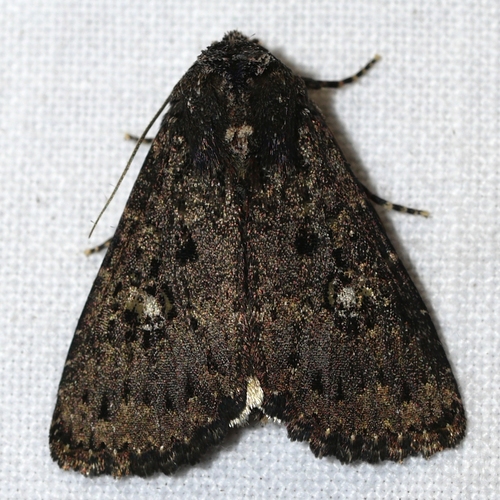
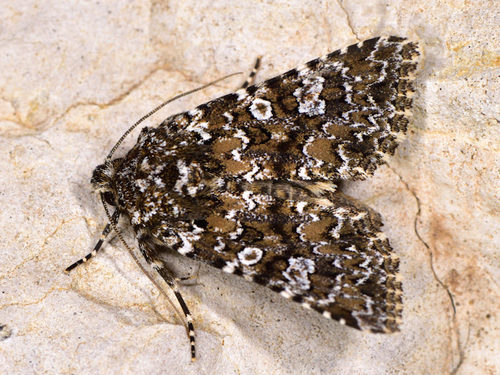
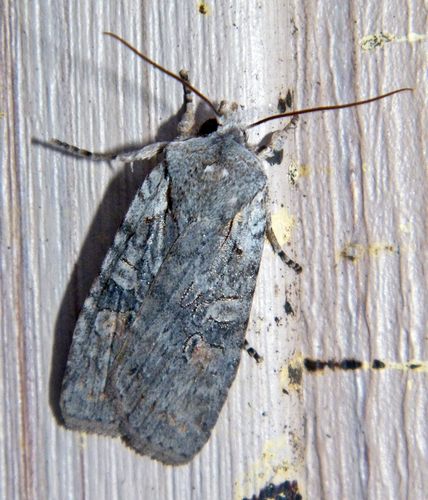
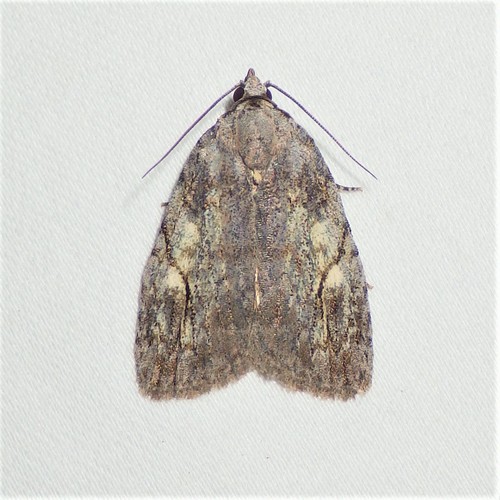
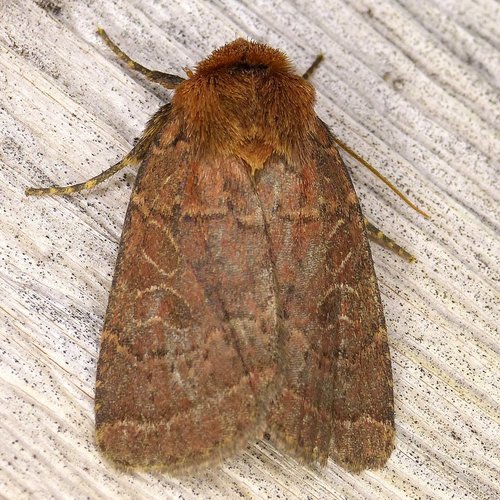
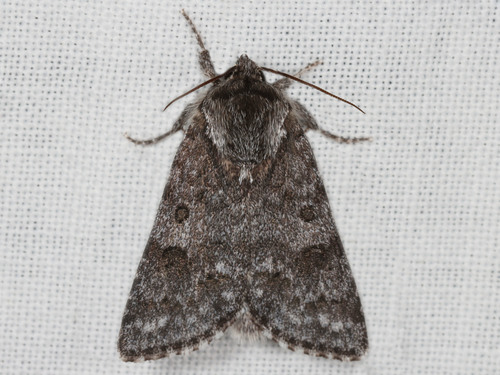
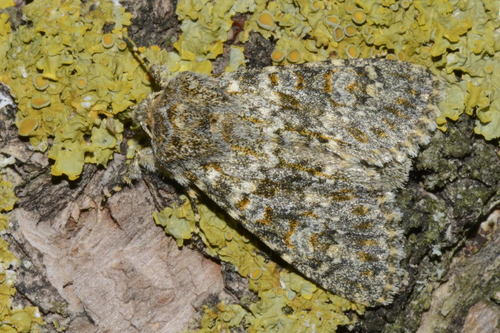
This species, currently classified as Polymixis flavicincta (Denis & Schiffermüller), 1775, was previously referred to as Agrotis flavicincta, with synonyms including flavicincta-major Esp. and dysodea Esp. nec Hbn. For the typical form, the forewing is pale grey, speckled with darker olive grey, more densely so in the median area. Orange scales mark the edges of the stigmata, the paths of the basal and submarginal lines, and vein 1. The lines are dark olive; the upper stigmata are paler, while the claviform stigma is darker, and the median shade is distinct. The hindwing is grey, darker in females, with darker veins, a cell spot, outer line, and submarginal shade. The species varies in the intensity of its coloration. Darker forms from Spain and Corsica are known as aberration meridionalis Bsd. The pale form calvescens Bsd., currently treated as Polymixis rufocincta calvescens (Boisduval, 1840), is pale grey with nearly all yellow scaling absent, and occurs in southern France, Italy, and Sicily. Aberration albescens ab. nov. is dull white, with no grey dusting outside the median area; its upper stigmata are also whitish, and its hindwing is paler than the typical form. The larva is pale bluish green, with a darker dorsal vessel and a broad pale spiracular stripe, and a green head. The wingspan of the adult is 40–50 mm, and the forewing length measures 17–22 mm.