About Polylepis australis Bitter
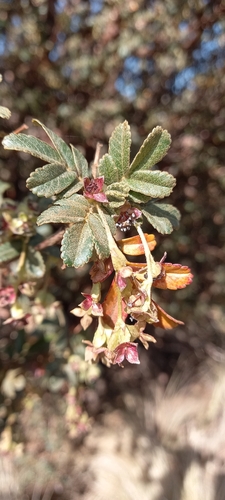
This tree species, Polylepis australis Bitter, has small pinnate leaves that measure 7–10 cm long, typically made up of five or seven leaflets. It survives harsh winters with the help of loose, papery, exfoliating brownish bark that forms in rolls, which is the rough outer covering of its woody stem. Polylepis australis is native to the Sierras Pampeanas, a series of north-south running ranges on the eastern side of the Andes in north-central Argentina. Its native range includes the Argentine provinces of Catamarca, Córdoba, Jujuy, Salta, and Tucumán. It grows at elevations between 1200 and 2900 meters, and is most commonly found in high-elevation forests and woodlands. The southernmost stands of Polylepis australis grow in the high Córdoba Mountains of central Argentina, at 1,200–2,884 m above sea level. South American Polylepis mountain forests are recognized as one of the most endangered forest ecosystems in the world. During a reforestation project, D. Renison of the University of Córdoba, Argentina, found that the germination rate of Polylepis australis stands decreases significantly as tree coverage decreases. Early results from additional collaborative studies with Isabell Hensen of the University of Halle, Germany, show a clear negative correlation between the seed viability of Polylepis australis and the level of human impact on its woodland stands. Polylepis australis seeds show substantial variation in both mass and germination percentage across different individual trees and different geographic regions.