About Polybia rejecta (Fabricius, 1798)
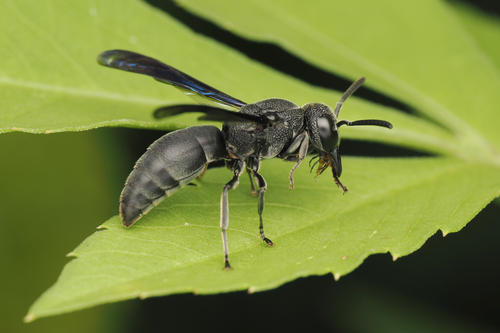
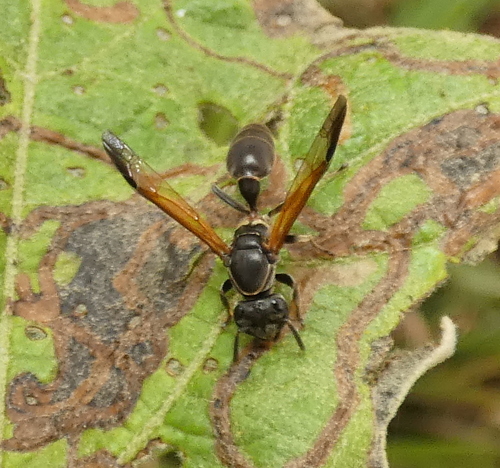
Description and habitat: Polybia rejecta has an almost completely black body, and it is distinguished by its sting autotomy. It has a small rounded head with short antennae, a thin body and thin wings. The distribution of this wasp is very dependent on the location of water bodies. Many aquatic macrophytes are important foraging targets for the wasp. The species is generally found in association with Azteca andreae and nests of various bird species. In general, wasps nest near these ants because the ants can provide protection against army ants. Wasp nests have been found on several plant species. Each comb is covered by an envelope, and succeeding combs are built on already existing envelopes. Distribution: This wasp occurs from Mexico south to Brazil. The typical climate that P. rejecta occupies in the Atlantic forest of Brazil is hot and humid. This region has two distinct seasons: one hot and humid, and the other dry and cool. This area gets 1350 to 1900 mm of precipitation a year, with altitude ranging between 236 and 515 meters. Polybia rejecta has been found in the vicinity of the frog species A. callidryas in the Brazilian Amazon region. This species also forms associations with specific ant species. Both the frogs and associated ants use the wasp's aggressive tendencies for protection against predators.