About Polybia occidentalis (Olivier, 1791)
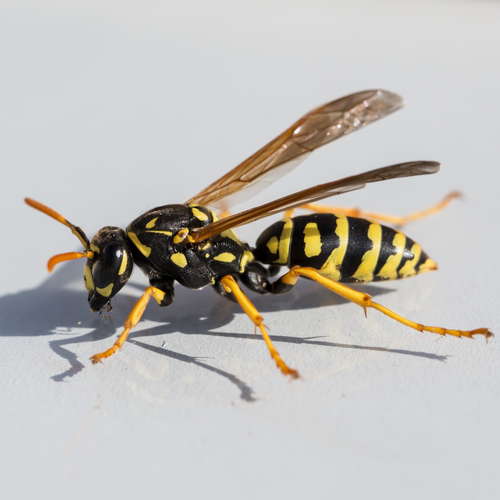
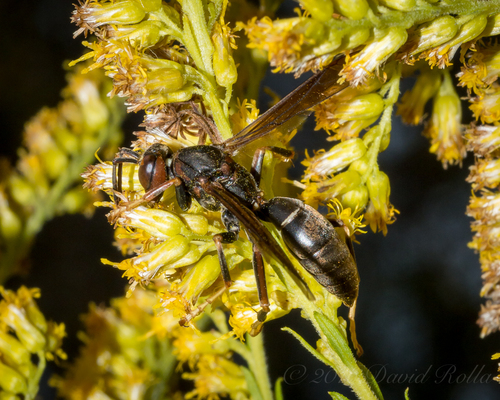
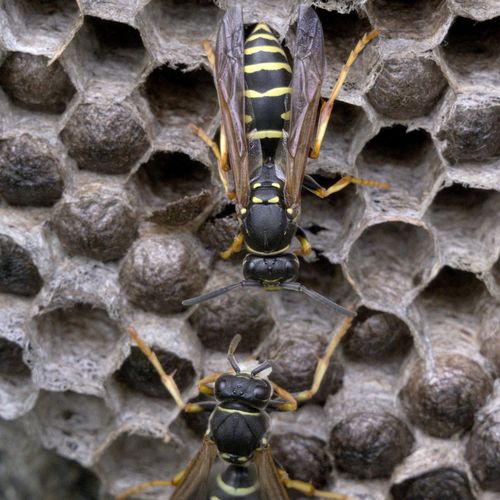
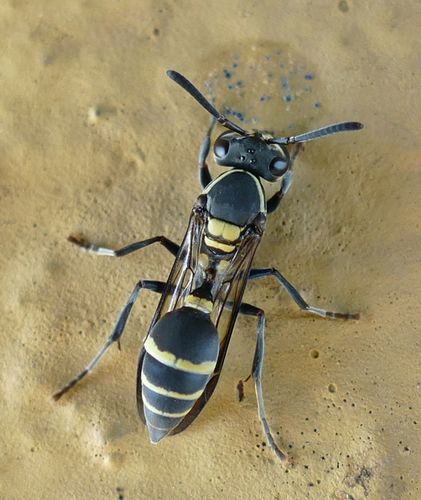
Polybia occidentalis is a black and yellow wasp species, with a black base color and few yellow stripes across its abdomen. It has thin wings, and a long, thin petiole connects its thorax to its abdomen. Worker individuals of this species have a mean dry weight between 3.80 and 6.71 mg, and their costal length ranges from 3.6 to 4.7 mm. Queen wasps can be distinguished from workers by their visibly larger, egg-filled ovaries. Males can be told apart from both workers and queens by their visible testes. This wasp species is distributed from Mexico to northern Argentina, and it is common in Costa Rica and Brazil. It inhabits neotropic regions featuring tropical forests with strong wet and dry seasonal cycles. These wasps nest in neotropic areas to access appropriate resources for nest building and prey gathering during the wet season, which they then rely on to survive through the dry season. Neotropic environments are well-suited for this species' swarm-founding colonies. They typically settle in locations with access to large carbohydrate sources. P. occidentalis builds nests in low-elevation areas, and finds shelter in trees, bushes, hedges, and even buildings.