About Poltys illepidus C.L.Koch, 1843
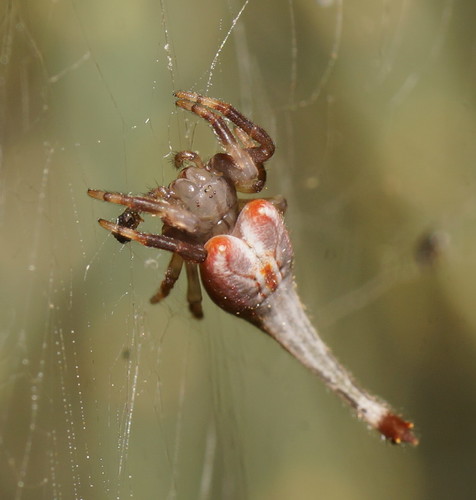
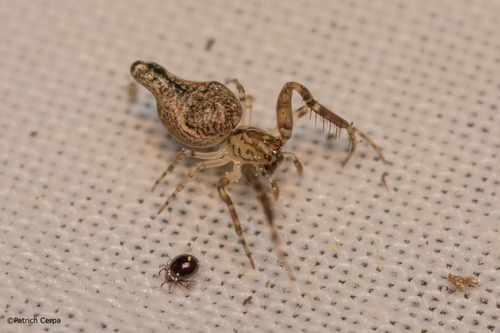
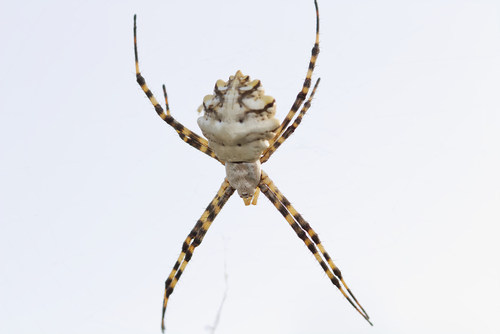
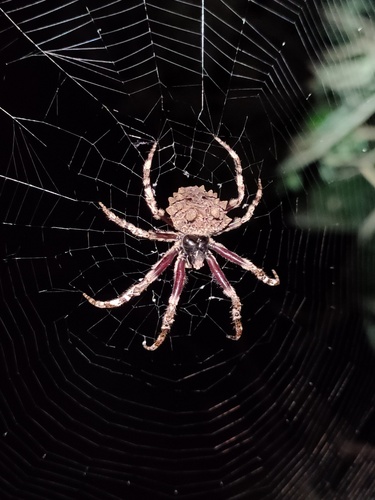
Poltys illepidus shows significant sexual dimorphism; females are considerably larger than males. This species is distributed across northern Australia, Papua New Guinea, and Southeast Asia, with confirmed records reaching as far north as Thailand. Within Australia, it occurs throughout Queensland, the Northern Territory, and Western Australia. It has also been recorded on Norfolk Island, and there are historical records of it from Lord Howe Island, though the status of any current populations on Lord Howe Island remains uncertain. Existing records of this species from Sri Lanka, India, the Philippines, and Japan need verification through examination of male specimens, as females from these regions have consistent morphological differences from the accepted range of variation for the species. Poltys illepidus builds nocturnal orb webs that measure 30 to 40 centimeters in diameter, placed between trees or low vegetation. Webs are typically built in open spaces up to 4 meters wide, and have a strong golden-colored bridge thread that stays in place during the day. The main structure of the web is usually dismantled at dawn. During daylight hours, these spiders use distinct camouflage strategies. Smaller individuals and males usually mimic dead twigs, while larger juveniles and adult females rest on tree trunks or in low vegetation, and often resemble bark, knobs, or galls. Some individuals have been observed hiding in curled leaves, dead flower heads, or low herbage. The species displays notable maternal care: females produce fluffy yellow silk egg sacs, which are sometimes placed in rolled leaves at the end of spanning web lines.