About Polites coras (Cramer, 1775)
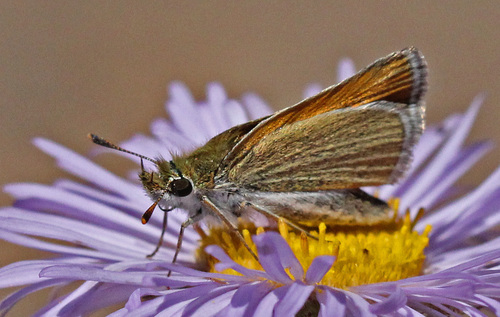
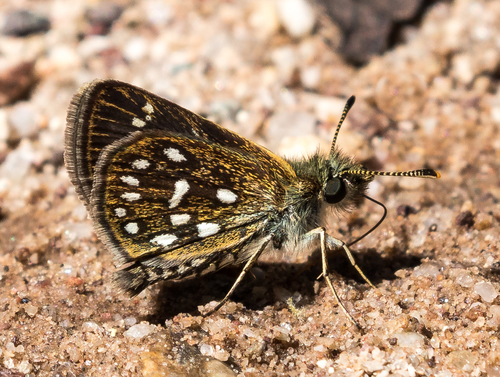
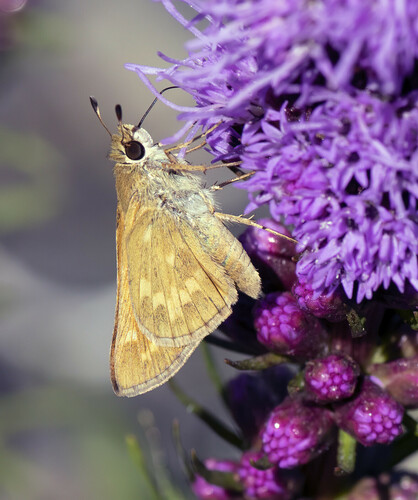
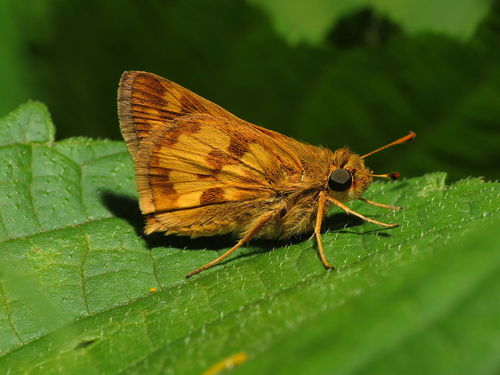
As adult Polites coras, also called Peck's skipper, both sexes display dark brown and yellowish-orange markings. On the ventral side of their hindwings, both sexes have a large, straw-coloured patch in the center. This patch is a key feature that distinguishes Polites coras from other species in the Polites genus. Males are lighter in colour than females, and they have a stigma, which is a round or oval mark, on the forewing. Similar to all other skippers, the ends of this species' antennae have tiny hooks. The wingspan of Peck's skipper ranges between 19 and 27 mm. Peck's skipper is active in flight from May to October, and produces two or three generations per year. Adult individuals feed on nectar from a variety of flowers, including red clover, purple vetch, and thistles. This species typically inhabits grassy areas, such as meadows, marshes, and roadsides. Like other grass skippers, Peck's skipper most commonly rests with its forewings held open in a V shape, while its hindwings are held horizontally out to the sides. They may also rest with all four wings folded together, so that only the bottom surfaces of the wings are visible. Males perch in sunny, open locations to wait for responsive females, and courtship occurs throughout the day. After mating, females lay eggs one at a time. Caterpillars of this species feed on rice cutgrass, bluegrass, and other types of grass.