About Polistes snelleni de Saussure, 1862
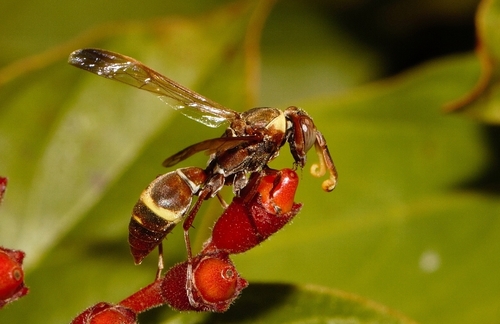
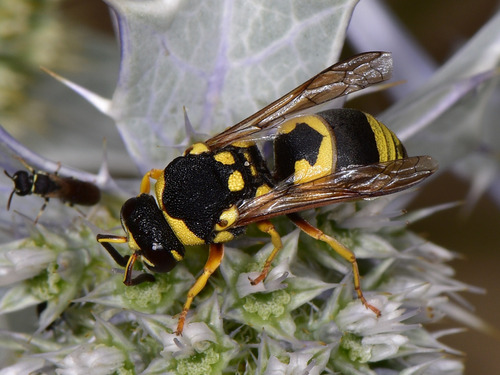
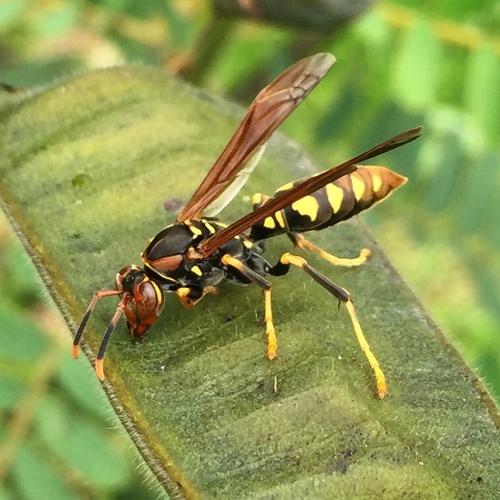
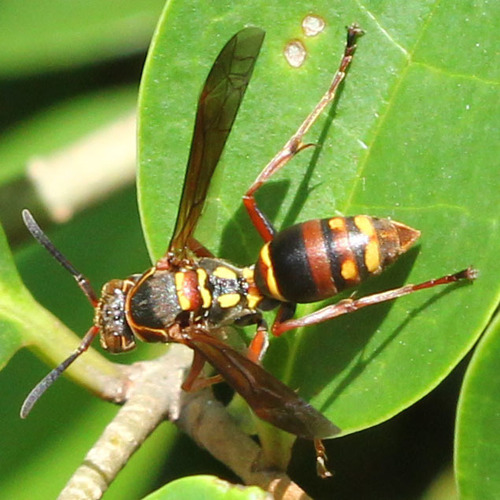
Polistes snelleni wasps, first described by de Saussure in 1862, have black and yellow bodies. Within the species, queens are the largest, followed in size by workers, young queens, and males. Workers typically have worn wings, which sets them apart from young queens. New reproductive females, or young queens, weigh an average of 102 mg. Workers can be recognized by their white-creamy body fat, and workers that have developed ovaries remain classified as workers, not reproductive females. Nests built by P. snelleni are oriented vertically, and most nests have a single comb. The comb is fan-shaped, connected by a pedicel to the basal cell, an arrangement that lets new cells be added to the outer distal end of the comb. The founding queen builds the nest on horizontal supports made from twigs or the surface of rock overhangs, and the nest petiole (stem) sits perpendicular to these supports. P. snelleni is generally distributed in Japan, with occasional occurrences in China and Korea. The species prefers grassy or bushy habitat in temperate regions. Its nests are most often found on south-facing slopes in areas with small trees and short weeds, hung from small trees, frequently larch trees, at 20 to 60 cm above ground. Nests can also be found in roadsides and rocky cliffs, in the sheltered spaces under rock overhangs. Rocks at these nest sites absorb sunlight, leading to higher daytime temperatures at the location. This species occupies an elevation zone between 200 and 400 meters.