About Polistes dorsalis (Fabricius, 1775)
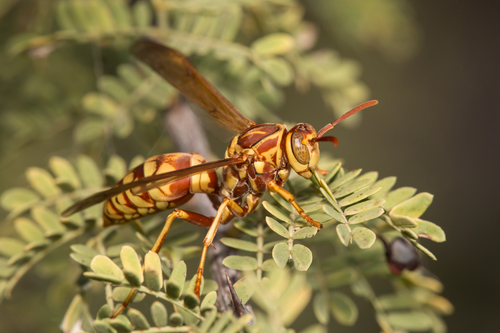
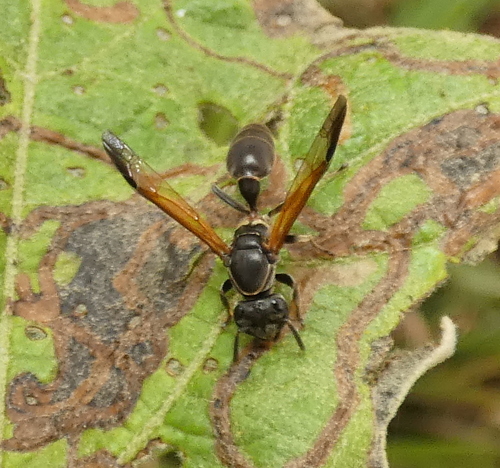
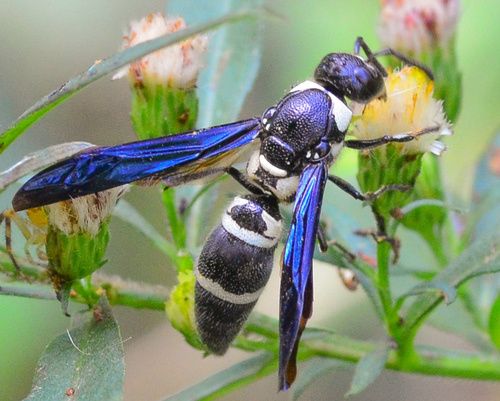
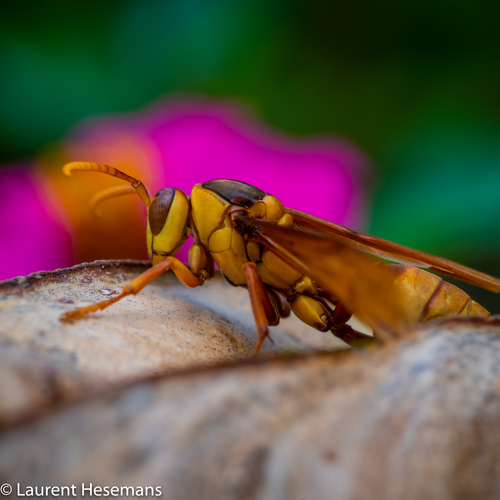
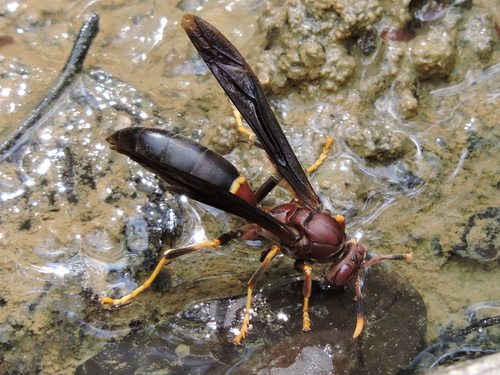
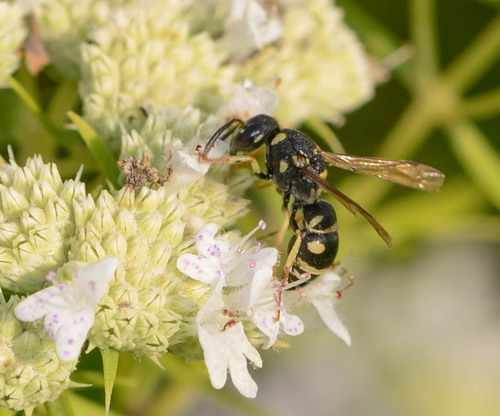
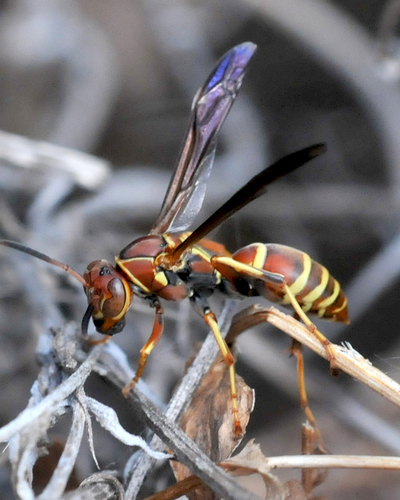
Polistes dorsalis is one of the smaller species in the Polistes genus of wasps. Like other wasps, it has two pairs of wings: forewings and hindwings. The forewing length of this species typically ranges from 11 to 17 mm. The exoskeletal plate located below the frons is shield-shaped, and is usually black or dark brown with a yellow band. The sides of the wasp are also primarily black, with distinct yellow markings. The flagellomeres (the elongated segments of the antenna that extend from the base) are dull orange and less tapered than those of related species. The abdomen of female Polistes dorsalis is made up of alternating sections of dull orange, yellow, brown, and black. Female coloration is similar to that of P. fuscatus, P. apachus, and P. bellicosus, but P. dorsalis can be distinguished from these species by its femoral markings and overall coloration, as it tends to have more black and brown coloration that forms a ring around the femora. Polistes dorsalis is common in the southeastern United States, and has been recorded in states including Massachusetts, New York, and Florida. This wasp species is also found across North America and Central America, including off the coast of the Bahamas, and groups have also been reported off the coasts of Mexico. P. dorsalis typically builds its nests in highly sheltered, inconspicuous locations that are harder for predators to access. Rock piles, hollowed-out logs, and other shelters close to the ground are common nesting sites, though the species can also be found commonly in more open field areas. Within urban areas, P. dorsalis often builds nests in shrubbery and on the lower border of roofs. Nests are generally small and open-faced, with no envelope surrounding the nest structure. They are typically single-tiered and can hold up to 75 adult wasps. Ergot is a fungus that grows on cereals and grasses, including rye. Fungi in the genus Claviceps infect the flowering head of grasses, replacing the rye grain with a hard, compact, deep purple ergot, which is a fungal mycelium. Sweet ergot honeydew oozes out from these infected flowering heads, and many insects feed on this exudate, acting as vectors that carry the fungus to new locations. Examination of foraging Polistes dorsalis found fungal conidia of the ergot fungus on multiple parts of the wasp's body, including the antennae, mouthparts, and gut. This means P. dorsalis is one of these insect species that can potentially transmit the ergot fungus. This occurs as part of the wasp's foraging behavior, which focuses specifically on finding fungus-infected grasses to collect ergot honeydew. P. dorsalis carries the honeydew droplets in its mouthparts from infected grasses such as Paspalum dilatatum Pior, then crawls or makes short hopping flights to other grass florets in the area. Polistes dorsalis can differentiate between infected and uninfected grass heads, and usually only lands on uninfected grasses to groom. Stopping at these grooming sites, along with visiting multiple grass species during foraging, increases the likelihood that P. dorsalis acts as a vector for fungal infection spread.