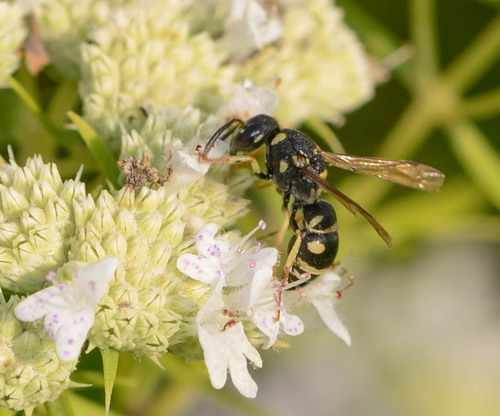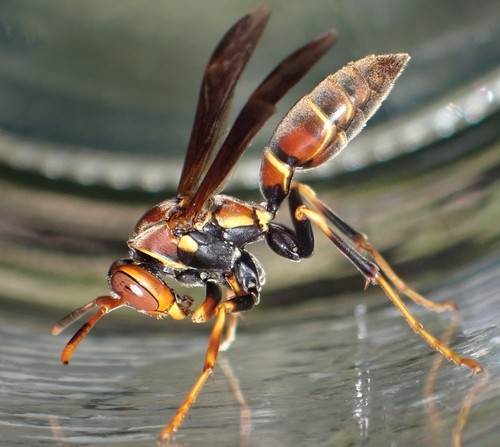
About Polistes bahamensis Bequard & Salt, 1931
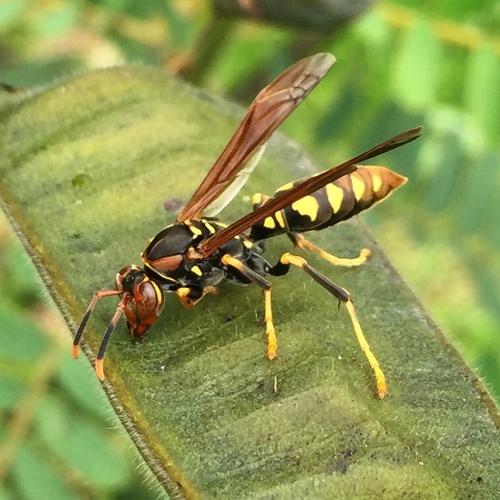
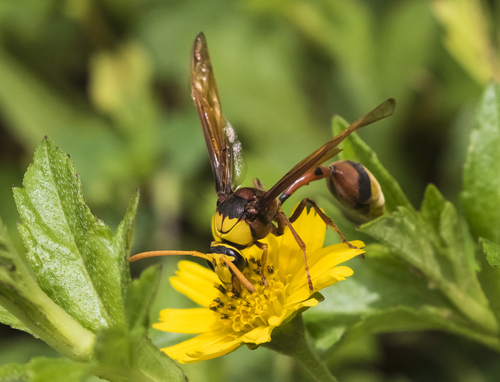
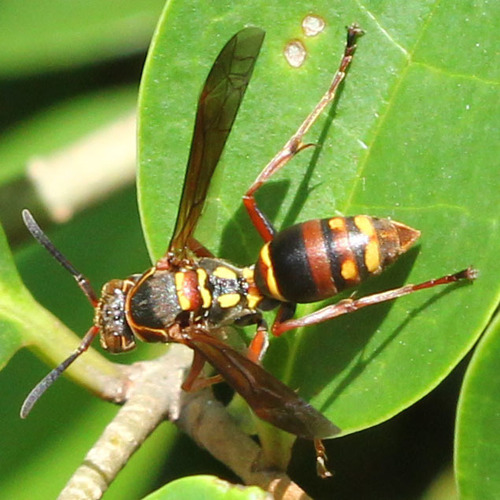
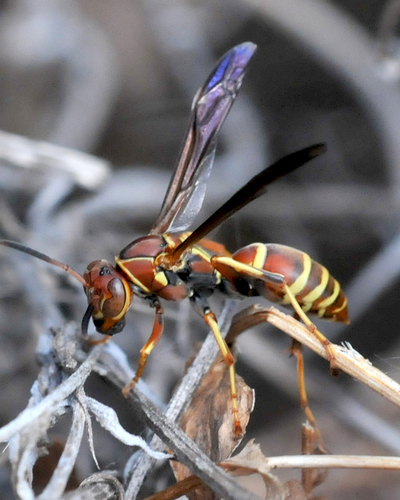
This species, formally named Polistes bahamensis by Bequard & Salt in 1931, has always been very difficult to identify. When Bequaert first examined three specimens from a New Orleans population around 1940, he initially thought they might be P. crinitus or P. versicolor introduced from the Caribbean. In 1955, Snelling examined the same population and classified it as P. exclamans var. exclamans. P. bahamensis is very similar to P. annularis, and both share a slender first metasomal segment. It can be distinguished from P. annularis by the yellow spot on the mesopleuron, an almost always present yellow apical band on the posterior back margin of the tergites, and more developed yellow markings on the mesosoma. The known range of P. bahamensis has expanded as more populations have been correctly identified as this species and more specimens have been collected. P. bahamensis most often nests under the eaves of building roofs, and sometimes nests under palm fronds. Its nests are suspended from an attachment stalk called a petiole. As of 2017, no Strepsipteran parasites have been reported for P. bahamensis.