About Polia nebulosa Hufnagel, 1766
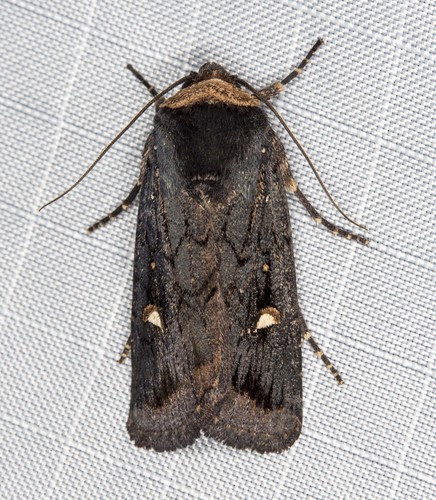
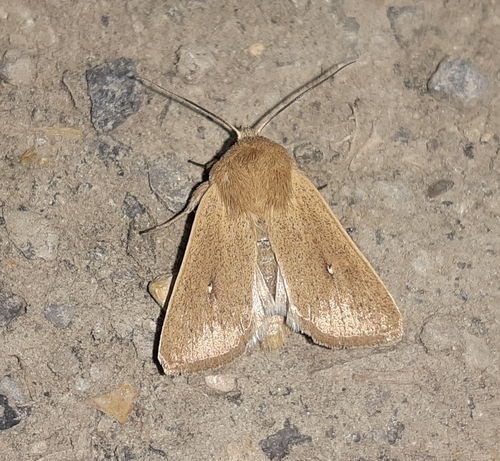
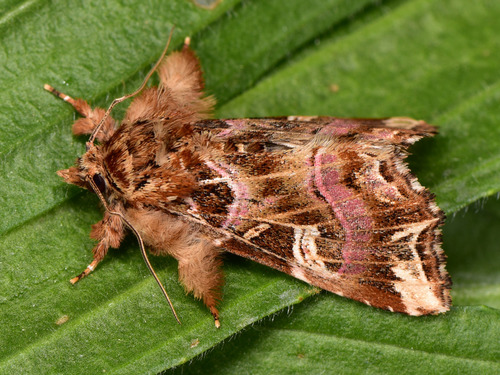
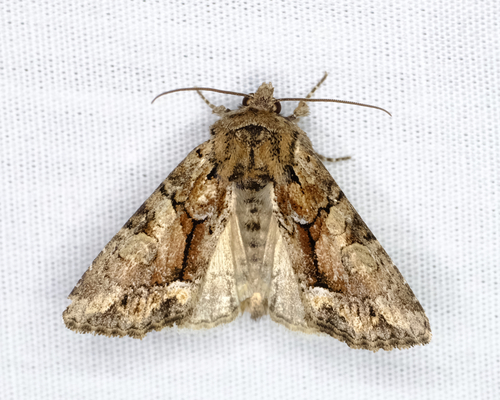
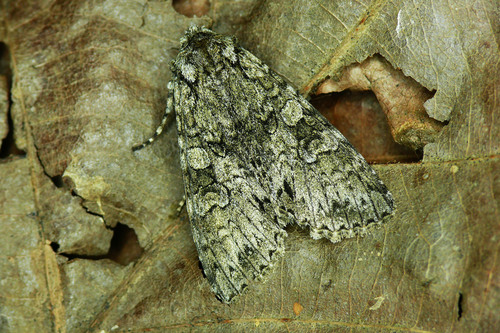
This species has a wingspan ranging from 41 to 52 mm. Its forewings are white with a brownish grey tint, and its stigmata match those found in Polia advena and Polia tincta. The submarginal line is preceded by black wedge-shaped marks, with a particularly prominent mark located before the indentation of the submedian fold. Hindwings are dull whitish, with a cellspot, veins, and a broad smoky fuscous marginal border. Several named aberrations and forms of this species are recognized. The form ab. pallida Tutt is a very pale white form collected in Scotland, where many of the dark transverse markings are no longer visible. bimaculosa Esp. is a darker grey form with more intense black markings. robsoni Collins is a distinct melanic form found only in Cheshire, west England. Two additional aberrations come from East Asia: asiatica Stgr. (also called lama Stgr.) is dull grey and smaller than the typical form, while askolda Oberth. from Askold Island, currently treated as a subspecies, is a large brown form. ab. calabrica nov. [Warren] is a very large form. It has a pale blue-grey forewing ground colour, with dark grey irroration and suffusion across the basal half; in one specimen, this dark scaling covers the entire forewing. All lines and stigmata are strongly defined in black and pale grey; the submarginal line in particular is continuous, black, and dentate. Hindwings of this form are also much darker, with all veins, the cellspot, and the outer line clearly marked. A series of four males and ten females of this form are held in the Tring Museum; they were collected in July 1907 by Dr. O. Neumann in the Sila Mountains, near Botte Donata, Calabria, at an elevation of 800 to 1000 meters. This form bears a loose resemblance to Polia goliath Oberth.