About Polemonium reptans L.
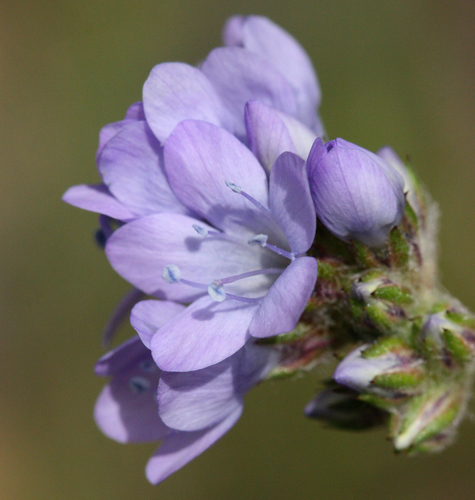
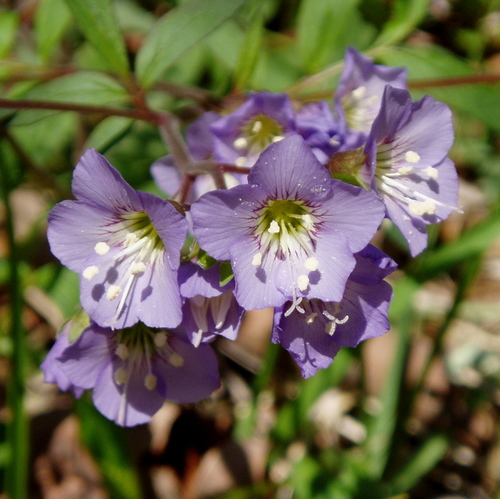
Jacob's ladder, scientifically Polemonium reptans L., grows to 50 centimeters (20 inches) tall. It produces pinnate leaves up to 20 centimeters (8 inches) long, each holding between 5 and 13 leaflets. Leaves and flower stems grow from a vertical crown that develops abundant fibrous roots. Flowers form in panicles on weak stems, opening from mid to late spring. Individual flowers measure 1.3 cm (1⁄2 in) long, with five fused-at-the-base light blue-violet petals enclosed by a tubular calyx with five pointed lobes. This species produces white pollen. Its stigma extends beyond the anthers, which makes self-pollination difficult, so cross-pollination by insects is required for the plant to produce seed. After pollination, flowers develop into an oval, three-chambered pod 6 mm (1⁄4 in) long that remains enclosed in the green calyx. The plant spreads naturally by reseeding itself. The Latin specific epithet reptans translates to creeping. Polemonium reptans typically grows in rich, moist woods, very often along streambanks. Its native range spans from Minnesota to New Hampshire in the northern United States, and from Georgia to Mississippi in the southern United States. It is most abundant in areas west of the Appalachian Mountains. The flowers of this species produce both pollen and nectar. Long- and short-tongued bees visit the plants to collect both nectar and pollen; syrphid flies and fire beetles (Pedilus lugubris) feed on its pollen; butterflies and moths drink its nectar. Among these visiting insects, large bees are the most effective at cross-pollination, because they most often touch the pollen-covered anthers. In cultivation, the plant prefers partial shade and mesic soil. It can tolerate full sun, but requires constantly moist soil to grow well. The dried roots of Polemonium reptans have a slightly bitter and acrid taste. This species has traditionally been used as herbal medicine to treat febrile and inflammatory diseases, ease coughs, colds and bronchial complaints, and encourage perspiration. It is also reported to bring relief from inflammations and infections. The root is rarely used in modern herbalism. Roots are harvested in autumn and dried for later use.